
Industrial baking and drying processes are fundamental to a wide range of manufacturing sectors, including food processing, ceramics, composites, coatings, and advanced materials. These environments are characterized by sustained high ambient temperatures, continuous operation cycles, and strict production tolerances. Within such conditions, lighting systems play a critical but often underestimated role, supporting operational visibility, process monitoring, quality inspection, and workplace safety.
Conventional lighting technologies were not originally designed to operate reliably in environments where ambient temperatures can exceed 90°C, 150°C, or even 200°C. As a result, lighting failure, reduced illumination levels, and frequent maintenance interruptions are common challenges in baking ovens, drying tunnels, and curing chambers. High-temperature LED lighting has emerged as a specialized solution engineered to withstand these extreme conditions while delivering stable, energy-efficient, and long-lasting performance.
This article explores the technical requirements, design principles, and application benefits of high-temperature LED lighting specifically tailored for industrial baking and drying processes. It provides a comprehensive reference for plant engineers, facility managers, and equipment designers seeking reliable illumination solutions for thermally demanding environments.
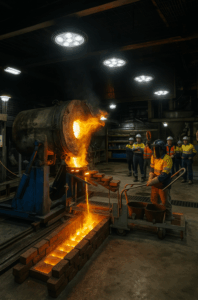
Industrial baking and drying systems operate across a wide spectrum of temperature ranges depending on the process and materials involved. Food baking tunnels may maintain steady temperatures between 90°C and 150°C, while industrial curing ovens, ceramic drying kilns, and composite material chambers can routinely exceed 200°C. In many cases, lighting fixtures are exposed not only to high ambient heat but also to radiant heat from heating elements and hot surfaces.
Additionally, these facilities often experience thermal cycling, where equipment is heated up and cooled down repeatedly during daily or weekly production schedules. Such temperature fluctuations place significant stress on lighting components, accelerating material fatigue, solder joint failure, and optical degradation if fixtures are not specifically designed for high-temperature operation.
Beyond heat, industrial baking and drying environments contain airborne contaminants that further challenge lighting reliability. In food processing, flour dust, sugar particles, grease vapors, and steam are common. In industrial drying lines, chemical fumes, solvents, paint overspray, and fine particulate matter may be present. These contaminants can accumulate on luminaires, reducing light output and causing premature component failure.
High humidity and condensation during cooling cycles also pose a risk to electrical components. Lighting systems must therefore be sealed effectively and constructed from materials that resist corrosion, contamination ingress, and thermal expansion-induced leakage.
Many baking and drying lines operate continuously, with conveyor belts, fans, and exhaust systems generating vibration and airflow. Lighting fixtures are often installed in confined spaces, above moving products or within enclosed tunnels where maintenance access is limited. These constraints require luminaires that are mechanically robust, compact in form factor, and capable of operating reliably for extended periods without intervention.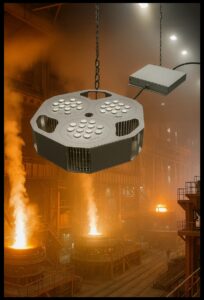
Traditional lighting technologies such as fluorescent lamps, metal halide, and high-pressure sodium fixtures suffer significant performance degradation under elevated temperatures. Ballasts, electrodes, and phosphor coatings are particularly sensitive to heat, leading to rapid lumen depreciation, color shift, and early lamp failure. In high-temperature baking environments, these systems often fail far earlier than their rated service life.
Frequent lamp replacement is not only costly but also disruptive in industrial baking and drying facilities. Maintenance often requires shutting down production lines, cooling ovens, and implementing safety procedures before personnel can access fixtures. The cumulative cost of labor, lost production time, and replacement components makes traditional lighting economically inefficient in high-temperature applications.
Glass-based lamps and high-voltage ballasts introduce additional safety risks when exposed to extreme heat. Lamp rupture, ballast overheating, and electrical faults can pose hazards to both personnel and equipment. In food production environments, broken glass contamination represents a critical quality and compliance risk.
High-temperature LED lighting systems are specifically engineered to overcome the limitations of traditional technologies. As solid-state devices, LEDs are inherently more resistant to vibration and thermal stress when properly designed. Advanced thermal management ensures that critical components operate within safe temperature limits even when ambient conditions are extreme.
Unlike conventional lamps, high-temperature LEDs maintain stable lumen output and color consistency over long operating periods. Their instant-on capability supports continuous production lines without warm-up delays, and their directional light distribution improves illumination efficiency in confined baking and drying spaces. Most importantly, reduced failure rates translate into improved process reliability and lower total cost of ownership.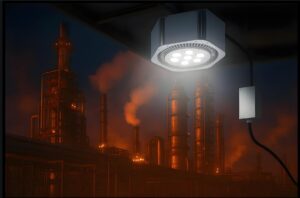
Effective thermal management is the cornerstone of high-temperature LED fixture design. Heat sinks with optimized surface geometry and high thermal conductivity materials are used to dissipate heat away from LED chips. In many designs, the LED driver is physically separated from the high-heat zone or housed in a remote enclosure to protect sensitive electronics.
Airflow optimization, whether through natural convection or forced ventilation, further enhances heat dissipation. These strategies collectively ensure that junction temperatures remain within acceptable limits, preserving luminous efficacy and extending service life.
Materials selection is critical in environments exceeding standard industrial temperature limits. High-temperature LED fixtures typically utilize aluminum alloys or stainless steel housings for structural integrity and corrosion resistance. Silicone-based gaskets and seals are employed instead of conventional rubber to maintain elasticity and sealing performance at elevated temperatures.
Optical components such as lenses and covers are manufactured from tempered glass or borosilicate glass, which can withstand thermal shock and prolonged heat exposure without discoloration or cracking.
High-temperature-rated LED drivers are designed using components with extended thermal tolerances. These drivers offer stable output under fluctuating input voltages and continuous operation, minimizing flicker and electrical stress. Integrated surge protection safeguards fixtures from power disturbances commonly found in industrial facilities.
High-temperature LED lighting systems are typically categorized into ambient temperature ratings such as 90°C, 150°C, and 200°C. Each classification corresponds to specific design enhancements, including upgraded materials, enhanced heat dissipation, and specialized drivers. Selecting the appropriate rating is essential to ensure long-term reliability and compliance with application requirements.
To accommodate diverse baking and drying processes, high-temperature LED fixtures are available in a wide range of power outputs, commonly from 50W to 400W and beyond. Optical configurations can be customized with narrow or wide beam angles to provide uniform illumination along conveyor belts, tunnel walls, or inspection zones.
Color temperature options, typically ranging from 3000K to 5600K, allow operators to optimize visual clarity and color rendering for specific tasks, such as food quality inspection or surface defect detection.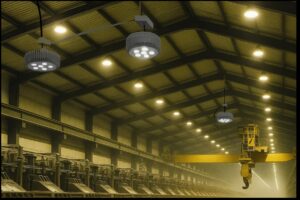
In industrial food baking lines, lighting must support both production efficiency and hygiene compliance. High-temperature LED fixtures provide consistent illumination in bread, biscuit, and snack baking tunnels, enabling operators to monitor product color, texture, and uniformity in real time. Sealed, easy-to-clean designs help meet food safety standards and prevent contamination.
Drying ovens used for coatings, adhesives, and painted components require reliable lighting to facilitate visual inspection during curing. High-temperature LEDs deliver stable illumination throughout long drying cycles, even in the presence of chemical vapors and elevated heat, ensuring quality control without process interruption.
Ceramic tiles, refractory materials, and composite components are often dried in environments with intense radiant heat and heavy dust. High-temperature LED lighting withstands these harsh conditions, providing durable illumination that supports process monitoring and reduces maintenance frequency in demanding industrial settings.
High-temperature LED lighting delivers substantial energy efficiency advantages in industrial baking and drying environments, even under extreme ambient heat conditions that traditionally reduce lighting performance. Unlike conventional light sources whose efficacy declines sharply as temperature rises, properly engineered high-temperature LED fixtures are designed to maintain stable luminous output and electrical efficiency at elevated ambient temperatures. This stability allows facilities to achieve consistent illumination levels without oversizing fixtures or increasing installed wattage to compensate for heat-related losses.
From an operational perspective, energy efficiency directly translates into measurable cost savings. Industrial baking and drying lines often operate continuously for long production cycles, sometimes 24 hours a day. Lighting systems that consume less power over these extended operating hours can significantly reduce overall electricity consumption. When combined with high luminous efficacy—often exceeding 140–160 lm/W even in high-temperature-rated designs—LED lighting reduces the energy cost per unit of production, an increasingly important metric for energy-intensive industries.
Beyond direct power savings, the long service life of high-temperature LED fixtures plays a critical role in lowering total cost of ownership. Traditional lighting systems frequently require lamp replacements, ballast servicing, and unplanned maintenance shutdowns. In contrast, high-temperature LEDs are engineered for extended operational lifetimes, often exceeding 50,000 hours under rated conditions. This longevity minimizes labor costs, spare parts inventory, and production downtime associated with maintenance activities.
Furthermore, reduced maintenance frequency has indirect economic benefits. Fewer interventions mean lower safety risks for maintenance personnel, less disruption to tightly scheduled production processes, and improved overall equipment effectiveness (OEE). In industries where downtime can result in product loss or quality deviations, reliable LED lighting contributes to operational continuity and predictable cost structures. Collectively, these energy and maintenance-related benefits position high-temperature LED lighting as a cost-effective investment rather than a simple infrastructure expense.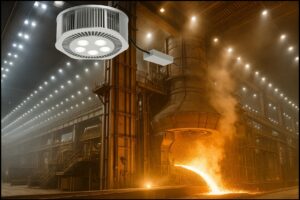
Proper installation is essential to fully realize the performance and longevity benefits of high-temperature LED lighting in baking and drying applications. Even fixtures designed for extreme environments can experience reduced lifespan or performance issues if installed without consideration of thermal dynamics, airflow, and radiant heat exposure. Therefore, installation planning should begin with a thorough assessment of the operating environment, including ambient temperature distribution, proximity to heating elements, and ventilation patterns.
One of the most critical considerations is fixture placement. Luminaires should be positioned to avoid direct exposure to radiant heat from burners, heating coils, or hot surfaces whenever possible. While high-temperature LEDs can tolerate elevated ambient temperatures, minimizing radiant heat load reduces thermal stress on internal components and enhances long-term reliability. In enclosed tunnels or ovens, mounting fixtures slightly outside the hottest zones or using protective shielding can significantly improve performance.
Ventilation and airflow management also play a vital role. Adequate clearance around fixtures allows for effective heat dissipation through natural convection or forced airflow. In some installations, auxiliary cooling strategies—such as remote-mounted drivers or external heat sinks—may be recommended to further protect sensitive electronics. Installation guidelines provided by manufacturers should be followed closely, as they are based on validated thermal testing.
Equally important is the selection of high-temperature-rated cabling, connectors, and mounting hardware. Standard electrical components may degrade rapidly under sustained heat, leading to insulation failure or electrical faults. Using certified high-temperature wiring and corrosion-resistant mounting materials ensures system integrity and compliance with industrial safety standards. Proper installation not only maximizes fixture lifespan but also reduces the risk of unplanned outages and safety incidents in demanding baking and drying environments.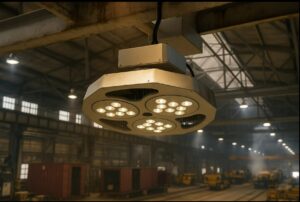
Safety and regulatory compliance are critical considerations in industrial baking and drying facilities, where high temperatures, electrical systems, and production processes intersect. High-temperature LED lighting systems are designed to address these challenges by incorporating robust safety features and meeting applicable industry standards. Compliance begins with electrical safety certifications that verify insulation integrity, grounding, and protection against overheating under rated operating conditions.
Ingress protection (IP) ratings are particularly important in baking and drying environments where dust, steam, oil vapors, or chemical fumes may be present. High IP-rated LED fixtures prevent the ingress of contaminants that could compromise electrical components or optical performance. In food processing applications, sealed designs also support hygiene requirements by preventing the accumulation of residues and enabling easier cleaning.
Thermal safety is another key aspect. High-temperature LED fixtures undergo extensive thermal testing to validate performance at specified ambient temperature ratings, such as 90°C, 150°C, or 200°C. These tests ensure that materials, seals, and electronic components maintain structural integrity and functional stability throughout prolonged exposure to heat. By reducing the likelihood of component failure, such fixtures lower the risk of electrical faults, fire hazards, and production disruptions.
Industry-specific compliance requirements must also be considered. In food and pharmaceutical facilities, lighting materials and designs must align with sanitation and contamination control standards. In heavy industrial settings, compliance with occupational safety regulations ensures that lighting systems do not introduce additional risks to personnel. By meeting these diverse safety and compliance criteria, high-temperature LED lighting supports both regulatory adherence and a safer working environment.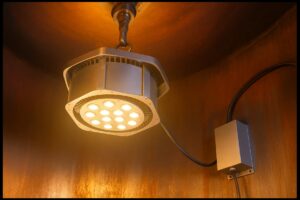
The development of high-temperature LED lighting continues to evolve as advances in materials science, electronics, and industrial automation reshape manufacturing environments. One significant trend is the use of next-generation materials with higher thermal tolerance and improved heat conductivity. These materials enable fixtures to operate reliably at even higher ambient temperatures while maintaining compact designs and high luminous efficacy.
Another emerging direction is the integration of smart monitoring and diagnostic capabilities. Sensors embedded within LED fixtures can track temperature, operating hours, and electrical performance in real time. This data can be integrated into plant monitoring systems, enabling predictive maintenance strategies that identify potential issues before failures occur. Such capabilities are particularly valuable in baking and drying processes, where unplanned downtime can be costly and disruptive.
Connectivity and control are also becoming increasingly important. High-temperature LED lighting is gradually being integrated into broader industrial automation and inspection systems. Adaptive lighting controls can adjust illumination levels based on process stages, inspection requirements, or occupancy, further improving energy efficiency and operational flexibility. In combination with machine vision systems, optimized lighting enhances defect detection and process consistency.
Looking ahead, sustainability considerations will continue to influence high-temperature LED innovation. Improved energy efficiency, longer service life, and recyclable materials support environmental goals while reducing lifecycle costs. As industrial baking and drying processes become more automated and data-driven, high-temperature LED lighting will play an increasingly strategic role in supporting intelligent, efficient, and resilient manufacturing systems.
Proper installation is essential to maximize the performance and lifespan of high-temperature LED fixtures. Luminaires should be positioned to minimize direct exposure to radiant heat sources while maintaining effective illumination coverage. Adequate ventilation and clearance around fixtures support heat dissipation.
Cabling, connectors, and mounting hardware must also be rated for high-temperature operation. Following manufacturer guidelines and industry standards ensures safe installation and reliable long-term performance in demanding baking and drying environments.
–The End—