
Achieving Long-Distance Accuracy and Uniform Illumination from High Poles
1. Introduction: Why Optics Define Modern Sports Lighting
Sports lighting is one of the most demanding applications in outdoor illumination. Whether for professional stadiums, training grounds, golf courses, or multi-purpose sports complexes, lighting systems must deliver high brightness, excellent uniformity, accurate aiming, and strict glare control—often from mounting heights exceeding 20, 30, or even 40 meters.
With the widespread adoption of LED technology, raw power is no longer the primary limitation. Instead, the real challenge lies in how precisely light is delivered to the playing surface. In this context, precision lens angles have become a defining factor in sports lighting performance, especially for long-distance and high-pole installations.
2. Unique Lighting Requirements in Sports Applications
Unlike general outdoor lighting, sports lighting must meet specific functional and regulatory requirements:
-
High horizontal and vertical illuminance
-
Excellent uniformity across the entire playing field
-
Minimal glare for athletes, referees, and spectators
-
Accurate light direction for high-speed motion tracking
-
Compliance with broadcast and competition standards
These requirements make sports lighting highly sensitive to optical design. A small deviation in beam angle can result in uneven illumination, excessive glare, or wasted light outside the playing area.
3. Understanding Precision Lens Angles in Sports Lighting
A lens beam angle defines how light emitted from an LED source is shaped and directed. In sports lighting, beam angles are not chosen arbitrarily; they are carefully selected and combined to meet precise photometric targets.
Precision optics ensure:
-
Light reaches the required distance from elevated mounting positions
-
Luminous intensity is concentrated where it is needed
-
Spill light and glare are strictly controlled
-
Lighting uniformity meets competition standards
In high-pole sports lighting, beam angle accuracy directly affects both lighting quality and system efficiency.
4. Long-Distance Lighting Challenges in Sports Venues
Sports venues often require flood lights to illuminate large playing areas from the perimeter, mounted on tall poles or roof structures. This creates several challenges:
-
Long throw distances to reach the center of the field
-
Significant light loss if optics are not optimized
-
Risk of glare caused by improperly shaped beams
-
Difficulty achieving uniformity without overlapping beams
Precision lens angles address these challenges by directing light exactly toward the target zones, reducing losses and improving overall performance.
5. Narrow Beam Angles for Long-Throw Sports Lighting
Narrow beam angles, typically ranging from 10° to 15°, are essential for long-distance projection in sports lighting.
Key functions of narrow beams:
-
Deliver high luminous intensity to distant areas
-
Reach the central zones of large fields from high poles
-
Reduce upward and sideways light spill
Common applications include:
-
Stadium lighting from 30–45 m poles
-
Football and soccer fields
-
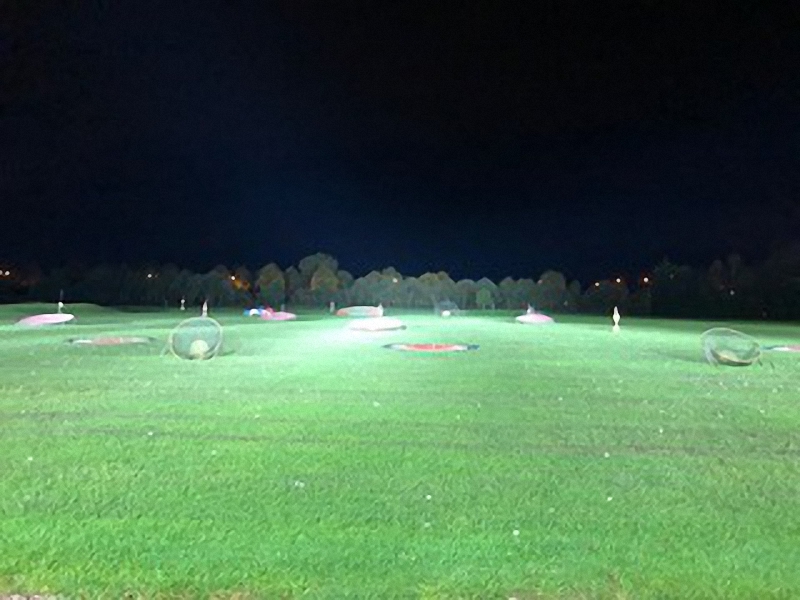
Golf driving ranges and fairways
-
Large outdoor arenas
Narrow beams must be precisely aimed, as even small misalignments can affect lighting uniformity. High-quality lenses ensure consistent beam shape and minimal optical deviation.
6. Medium Beam Angles for Balanced Field Coverage
Medium beam angles, such as 30°, 45°, or 60°, are used to cover mid-range areas and transition zones between near and far-field lighting.
Advantages in sports lighting:
-
Improve overall uniformity
-
Reduce extreme brightness contrast
-
Provide smooth light overlap between fixtures
These beam angles are often used to illuminate sidelines, penalty areas, and surrounding zones, complementing narrow-beam optics aimed at long distances.
7. Wide Beam Angles for Near-Field and Peripheral Areas
Wide beam angles (90°–120°) play a supporting role in sports lighting systems.
Typical uses include:
-
Near-pole ground coverage
-
Team benches and technical areas
-
Perimeter zones and access paths
While wide beams are not suitable for long-distance projection, they help eliminate dark spots and ensure comfortable visibility around the playing environment when used appropriately.
8. Combining Multiple Lens Angles in One Sports Lighting System
Modern sports lighting solutions increasingly rely on multi-lens configurations. A single luminaire may include different lens angles to address various zones of the field.
Benefits of multi-angle systems:
-
Optimized light distribution across all distances
-
Fewer luminaires required
-
Improved uniformity and efficiency
-
Greater design flexibility
This approach is especially valuable in stadiums and high-level sports facilities where precision and efficiency are equally important.
9. Adjustable and Rotatable Modules for Accurate Aiming
In high-pole sports lighting, precise aiming is critical. Fixtures equipped with rotatable or adjustable LED modules allow installers to fine-tune beam direction on site.
Key advantages:
-
Accurate alignment with lighting simulation results
-
Easier commissioning and adjustment
-
Reduced maintenance costs
-
Improved long-term performance
These features are particularly beneficial in professional sports venues where lighting accuracy is closely monitored.
10. Glare Control and Athlete Visual Comfort
Glare is a major concern in sports lighting. Excessive brightness or poorly controlled beams can distract athletes and affect performance.
Precision lens angles help:
-
Direct light away from players’ line of sight
-
Maintain high illuminance without discomfort
-
Improve visual clarity and reaction time
By combining narrow beams with precise cut-off angles, modern sports lighting systems achieve both performance and comfort.
11. Compliance with Sports Lighting Standards
Sports lighting must comply with various international and regional standards, such as those for professional competitions and broadcasting.
Precision optics play a key role in meeting:
-
Illuminance level requirements
-
Uniformity ratios
-
Glare limits
-
Light spill and environmental regulations
Well-designed lens systems simplify compliance and reduce the need for excessive fixture counts.
12. Conclusion: Precision Optics Are the Foundation of Professional Sports Lighting
In modern sports lighting, precision lens angles are not an option—they are a necessity. Especially in long-distance and high-pole installations, accurate optical control defines lighting quality, efficiency, and compliance.
By combining advanced LED technology with high-precision lenses, adjustable modules, and multi-angle optical design, sports lighting systems can deliver consistent, uniform, and glare-controlled illumination that meets the highest professional standards.
Ultimately, it is precision optics—not just wattage—that determines whether a sports lighting project truly performs at a world-class level.