
Lighting in heat treatment plants and industrial furnace areas is one of the most technically demanding challenges in modern industrial engineering. Unlike conventional manufacturing environments, these areas are continuously exposed to extreme ambient temperatures, intense radiant heat, airborne contaminants, vibration, and long operating cycles that can exceed 24 hours per day. Under such conditions, standard industrial luminaires—whether fluorescent, HID, or even standard LED fixtures—fail prematurely, resulting in frequent outages, unsafe working conditions, and high maintenance costs.
In recent years, high-temperature LED technology has emerged as a decisive solution for these hostile environments. By combining advanced thermal management, heat-resistant electronic components, and purpose-built mechanical design, high-temperature LEDs can operate reliably in ambient temperatures ranging from 90°C to as high as 200°C. This capability makes them particularly suitable for heat treatment lines, furnace mouths, forging zones, and other high-radiant-heat industrial locations.
This article provides an in-depth technical and application-focused analysis of high-temperature LED lighting specifically customized for a 50W–400W product line with temperature ratings of 90°C, 150°C, and 200°C. Each section examines the operational realities of furnace-area lighting, explains how specialized LEDs overcome these challenges, and offers practical guidance for selecting, installing, and maintaining high-temperature luminaires in demanding industrial settings.
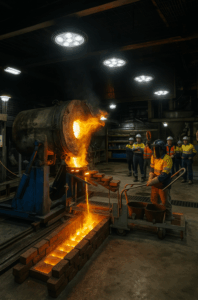
Heat treatment and industrial furnace environments represent some of the most extreme operating conditions found in modern manufacturing facilities. From a lighting engineering perspective, these areas combine sustained high ambient temperatures, intense radiant heat, airborne contaminants, mechanical vibration, and long daily operating cycles, all of which interact to accelerate luminaire degradation. Understanding these conditions in detail is essential for selecting and deploying high-temperature LED lighting that will perform reliably over its intended service life.
Ambient temperature is the most immediately apparent challenge. In many heat treatment plants, peripheral areas such as walkways, material staging zones, and equipment platforms regularly experience temperatures between 80°C and 100°C due to heat dissipation from furnaces, ovens, and thermal processing lines. While these temperatures may appear moderate compared to furnace core temperatures, they already exceed the safe operating limits of standard industrial lighting equipment. In more demanding locations—such as quenching stations, annealing bays, or continuous heat treatment lines—ambient air temperatures of 120°C to 150°C are not uncommon, particularly during peak production cycles or summer operation.
Radiant heat introduces an even more complex thermal load. Unlike ambient temperature, which reflects the temperature of the surrounding air, radiant heat directly transfers energy from hot furnace surfaces, molten materials, or heated products to nearby objects. Lighting fixtures mounted near furnace doors, inspection windows, or discharge openings can experience surface temperatures far higher than the measured air temperature. This localized heating effect can cause rapid thermal stress, leading to warping of housings, degradation of seals, and premature failure of electronic components if the luminaire is not specifically designed for such exposure.
Thermal cycling further exacerbates these challenges. Many heat treatment operations involve frequent start-up and shutdown sequences, batch processing, or variable load conditions. Each cycle subjects lighting fixtures to repeated expansion and contraction, stressing mechanical joints, fasteners, solder connections, and sealing materials. Over time, this cyclic stress can result in microcracks, loss of ingress protection, and gradual decline in electrical reliability. High-temperature LED luminaires must therefore be engineered not only for maximum operating temperature but also for long-term resistance to thermal fatigue.
In addition to heat, furnace environments are characterized by high levels of airborne contaminants. Metal scale, iron oxide dust, carbon particles, oil mist, and process residues are commonly present in heat treatment facilities. These contaminants can accumulate on luminaire surfaces, obstruct heat dissipation fins, and penetrate poorly sealed fixtures. In chemically aggressive processes, corrosive gases may further attack exposed materials, accelerating oxidation and surface degradation. Robust sealing systems and corrosion-resistant materials are therefore critical design requirements for furnace-area lighting.
Mechanical vibration is another defining characteristic of these environments. Heavy machinery, rolling lines, forging hammers, conveyors, and cranes generate continuous vibration that can loosen fasteners, damage internal wiring, and fatigue structural components. Lighting fixtures mounted at height or on steel structures are particularly vulnerable. High-temperature LED luminaires intended for furnace areas must incorporate reinforced housings, vibration-resistant mounting systems, and secure electrical connections to ensure stable operation over time.
Finally, lighting in heat treatment and furnace zones plays a vital safety role. Operators rely on consistent, high-quality illumination to monitor process conditions, handle hot materials, operate cranes and forklifts, and perform inspections. Inadequate or unreliable lighting increases the risk of accidents, production errors, and equipment damage. As a result, lighting systems in these areas are not merely auxiliary infrastructure but a critical component of overall plant safety and operational efficiency.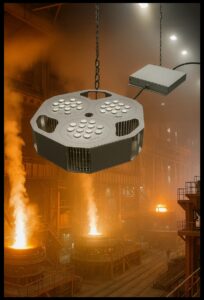
Traditional industrial lighting technologies were never designed to withstand sustained high-temperature exposure. High-intensity discharge (HID) lamps, including metal halide and high-pressure sodium fixtures, suffer from rapid lumen depreciation when exposed to elevated temperatures. Ballasts are particularly vulnerable, often failing long before their nominal lifespan when ambient temperatures exceed recommended limits.
Fluorescent lighting performs even worse in furnace areas. Elevated temperatures drastically reduce lamp efficiency, cause unstable ignition, and accelerate phosphor degradation. Frequent lamp replacement becomes unavoidable, leading to excessive maintenance costs and operational downtime.
Even standard industrial LED fixtures, while superior to legacy technologies in normal environments, are not inherently suitable for high-temperature applications. Conventional LED drivers typically have maximum operating temperature ratings of 60°C to 70°C. When exposed to higher temperatures, driver failure becomes inevitable, regardless of LED chip quality.
The cumulative effect of these limitations is a lighting system that requires constant intervention, undermines safety compliance, and fails to deliver predictable total cost of ownership. This reality has driven the development of dedicated high-temperature LED solutions engineered specifically for furnace-area deployment.
High-temperature LED luminaires differ fundamentally from conventional industrial lighting in both design philosophy and material selection. At the core of their performance is advanced thermal management. Heat-resistant aluminum alloys with high thermal conductivity are used to create housings that efficiently dissipate internal heat while resisting deformation under extreme conditions.
Electronic components are carefully selected for high-temperature endurance. Capacitors, resistors, and semiconductors are rated for elevated operating temperatures, significantly extending driver lifespan. In many designs, drivers are thermally isolated from the LED light engine or mounted remotely to reduce exposure to ambient heat.
Optical components, including lenses and protective covers, are manufactured from high-temperature-resistant glass or specialized polymers that maintain optical clarity without yellowing or cracking. Sealing systems are engineered to maintain IP65 protection even under continuous thermal expansion and contraction.
Together, these features allow high-temperature LEDs to deliver stable lumen output, consistent color performance, and long operational life in environments where traditional luminaires fail rapidly.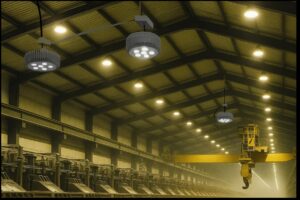
Selecting the correct temperature rating is critical to ensuring reliable performance in furnace environments. High-temperature LED fixtures are typically categorized into three primary performance classes: 90°C, 150°C, and 200°C.
90°C-rated fixtures are designed for peripheral heat treatment zones, service corridors, and areas adjacent to furnaces where ambient temperatures are elevated but not extreme. These luminaires provide an optimal balance of performance, efficiency, and cost for many industrial applications.
150°C-rated fixtures are engineered for direct exposure to high-temperature process areas, including heat treatment bays, annealing lines, and forging zones. Enhanced thermal isolation and reinforced electronic components enable continuous operation without accelerated degradation.
200°C-rated fixtures represent the highest performance class and are intended for the most extreme environments, such as furnace mouths, discharge openings, and areas with intense radiant heat. These luminaires incorporate maximum thermal shielding, specialized materials, and conservative electrical design to ensure safety and reliability under continuous extreme heat exposure.
Maintaining optical performance under high-temperature conditions is a defining characteristic of professional-grade high-temperature LEDs. Unlike traditional lamps, which suffer severe lumen depreciation, high-temperature LEDs are designed to preserve luminous flux over extended operating periods.
Color temperature options ranging from 3000K to 5600K allow customization based on task requirements. Warmer color temperatures improve visual comfort in high-glare environments, while cooler temperatures enhance contrast for inspection and precision work. High color rendering index (CRI) values ensure accurate color perception, which is critical for quality control and defect detection.
Glare management is equally important. Carefully engineered optics distribute light evenly, reducing harsh shadows and minimizing direct glare, even at high mounting heights commonly found in industrial furnace facilities.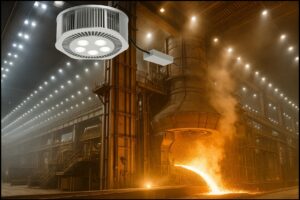
Furnace-area LED luminaires incorporate a range of design features that directly address environmental hazards. IP65-rated sealing protects against dust, airborne particles, and moisture ingress. Anti-corrosion coatings prevent oxidation and chemical degradation, extending fixture lifespan in aggressive industrial atmospheres.
Mechanical robustness is ensured through reinforced housings, vibration-resistant mounting brackets, and impact-resistant materials. In critical applications, emergency backup options and compatibility with industrial control systems further enhance safety and operational resilience.
Energy efficiency is often discussed in the context of lighting upgrades, but in high-temperature industrial environments, its implications extend far beyond reduced electricity consumption. For heat treatment plants and furnace areas, energy-efficient lighting directly contributes to thermal management, operational continuity, and long-term cost control. High-temperature LED luminaires in the 50W–400W range are uniquely positioned to deliver these benefits while maintaining reliable performance under extreme conditions.
Traditional lighting technologies such as HID, halogen, or incandescent lamps convert a significant portion of electrical energy into heat rather than useful light. In already hot furnace environments, this excess heat further elevates local temperatures, placing additional stress on both the lighting equipment and surrounding infrastructure. High-temperature LEDs, by contrast, achieve substantially higher luminous efficacy, producing more usable light per watt while minimizing additional thermal load. This characteristic is particularly valuable in confined or poorly ventilated furnace areas, where every reduction in heat generation improves overall environmental stability.
From an operational cost perspective, the advantages of high-temperature LEDs become even more pronounced when maintenance requirements are considered. In furnace zones, replacing failed lighting fixtures is rarely a simple task. Access often requires production shutdowns, specialized lifting equipment, safety permits, and coordination with maintenance teams. Each intervention carries not only direct labor costs but also indirect costs associated with lost production time and increased safety risk. By offering long service life even at ambient temperatures of 90°C, 150°C, or 200°C, high-temperature LED fixtures dramatically reduce the frequency of such interventions.
The ability to select appropriate wattages—from compact 50W units for localized task lighting to powerful 400W luminaires for high-bay furnace halls—further enhances energy optimization. Rather than over-lighting an area with oversized fixtures, engineers can tailor illumination levels precisely to application requirements. This targeted approach improves visual comfort, reduces glare, and avoids unnecessary energy consumption.
Over the full lifecycle of a lighting system, these factors translate into a compelling return on investment. Although high-temperature LED fixtures typically represent a higher upfront cost compared to conventional luminaires, the combination of lower energy consumption, reduced maintenance frequency, extended service life, and improved operational reliability results in a significantly lower total cost of ownership. For facilities operating continuously under extreme thermal conditions, payback periods are often shorter than anticipated, making high-temperature LEDs not only a technical upgrade but a sound financial decision.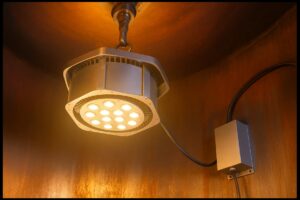
High-temperature LED lighting is widely deployed across steel heat treatment lines, forging shops, aluminum extrusion facilities, ceramic kilns, glass manufacturing plants, and industrial curing chambers. In each case, reliable illumination enhances safety, productivity, and process visibility.
Proper installation is essential to maximizing performance and lifespan. Adequate mounting distance from radiant heat sources, the use of heat shields, and strategic airflow planning all contribute to thermal stability. Electrical wiring must use high-temperature-rated insulation, and regular inspection ensures optimal performance.
High-temperature LED systems support compliance with industrial safety regulations by providing consistent illumination in hazardous environments. Thermal ratings, ingress protection, and electrical safety certifications ensure suitability for demanding industrial applications.
The evolution of high-temperature industrial lighting is closely linked to broader advancements in materials science, electronics, and digital manufacturing technologies. As heat treatment and furnace operations continue to demand higher efficiency, greater reliability, and enhanced safety, lighting systems are expected to play an increasingly strategic role within industrial infrastructure. Several key trends are shaping the future of high-temperature LED solutions.
One significant area of development is materials innovation. Ongoing research into high-temperature alloys, ceramic-based substrates, and advanced thermal interface materials is enabling luminaires to withstand even higher ambient and radiant heat levels. These materials improve heat dissipation, reduce thermal resistance within the luminaire, and enhance long-term structural stability. As a result, future generations of high-temperature LEDs are expected to extend reliable operation beyond current 200°C thresholds, opening new possibilities for lighting directly adjacent to extreme thermal processes.
Advancements in electronic component design are also driving progress. High-temperature-rated capacitors, power semiconductors, and driver architectures are becoming more robust and compact. Improved efficiency at the driver level reduces internal heat generation, further extending service life. In parallel, remote driver configurations and modular designs are gaining popularity, allowing sensitive electronics to be positioned away from the hottest zones while maintaining high optical performance at the point of illumination.
Digitalization and smart manufacturing concepts are another major influence. Integration of high-temperature LED lighting with industrial control systems enables real-time monitoring of operating conditions such as temperature, voltage, and runtime. Predictive maintenance algorithms can analyze this data to identify early signs of degradation, allowing maintenance teams to plan interventions proactively rather than react to unexpected failures. In high-risk furnace environments, this capability enhances safety while minimizing unplanned downtime.
Sustainability considerations are also shaping future design priorities. As industries seek to reduce carbon emissions and improve energy efficiency, high-temperature LED lighting will play a role in achieving these goals. Longer product lifespans reduce material waste, while improved energy efficiency lowers overall power demand. In some facilities, integration with renewable energy systems and advanced energy management platforms further amplifies these benefits.
Looking ahead, high-temperature industrial lighting is expected to evolve from a passive utility into an intelligent, integrated system that supports process optimization, safety management, and sustainability objectives. For heat treatment and furnace operations, adopting advanced high-temperature LED solutions is not merely a response to harsh conditions but a strategic investment in the future resilience and competitiveness of industrial facilities.
High-temperature LED lighting represents a transformative solution for heat treatment and industrial furnace environments. By selecting the appropriate wattage and temperature rating, facilities can achieve long-term reliability, enhanced safety, and reduced operational costs even under the most extreme conditions.
–The End–