Industrial environments present a unique set of challenges for workplace safety and operational efficiency. Among these, “hot zones”—areas with consistently high temperatures—pose significant risks not only to equipment but also to personnel. These zones are typically found in metal processing plants, glass manufacturing facilities, chemical processing areas, and other high-temperature industrial settings. In such environments, reliable lighting is not merely a convenience; it is a critical component of workplace safety, operational accuracy, and regulatory compliance.
Lighting stability in these zones is crucial because it directly impacts visibility, reduces the likelihood of accidents, and ensures smooth operational processes. Inconsistent or failing lighting can lead to serious consequences, including slips, falls, misjudgments in handling equipment, and even catastrophic industrial incidents. Moreover, hot zones often present challenging conditions such as dust, humidity, corrosive gases, and mechanical vibrations, which can further compromise standard lighting solutions.
This article aims to explore the importance of lighting stability in high-temperature industrial zones, the challenges faced by lighting systems in such environments, and the technologies and strategies that can ensure optimal performance. By addressing these factors, industrial managers and engineers can significantly enhance safety, productivity, and equipment longevity.
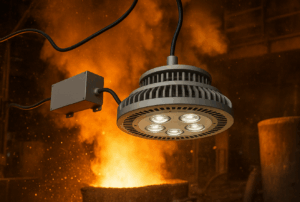
Hot zones are defined as areas within industrial facilities where temperatures exceed normal operational ranges and can reach levels that challenge both human endurance and equipment reliability. Common examples include steel mills, glass furnaces, incineration plants, chemical reactors, and high-temperature ovens used in food processing or ceramics. These zones are not only characterized by elevated temperatures but also by the presence of dust, airborne particles, corrosive chemicals, and high-intensity vibrations due to heavy machinery.
One of the primary challenges of operating in hot zones is the rapid degradation of materials. Standard lighting fixtures, especially conventional fluorescent or incandescent solutions, often fail under sustained heat exposure. Components such as plastics, sealants, and electronic drivers are particularly vulnerable, leading to short lifespans and frequent maintenance requirements. For personnel working in these areas, inadequate lighting can reduce visibility, increase fatigue, and elevate the risk of accidents. Even minor inconsistencies in illumination can compromise safety, especially when employees are handling hazardous materials or operating heavy machinery.
Moreover, hot zones often require continuous lighting to ensure uninterrupted operations. Shutdowns for maintenance or repairs not only disrupt production schedules but can also expose workers to additional safety risks if emergency lighting is insufficient. Therefore, understanding the environmental characteristics of hot zones is the first step toward implementing a robust and reliable lighting strategy.
Lighting is a fundamental element of workplace safety, yet its importance is frequently underestimated in high-risk industrial settings. Adequate illumination ensures that employees can navigate the work environment safely, identify hazards quickly, and perform precision tasks without error. In hot zones, where visibility can be further compromised by steam, dust, or glare from molten materials, stable lighting becomes a lifeline for worker safety.
Effective lighting supports operational safety in multiple ways. First, it reduces the risk of accidents by illuminating walkways, staircases, and hazardous machinery. Inadequate lighting, on the other hand, is often a contributing factor in slips, trips, and falls, which are among the most common workplace injuries in industrial settings. Second, stable lighting improves accuracy and efficiency in task execution. Workers performing tasks such as welding, material handling, or chemical mixing require consistent light intensity to avoid errors that could result in injuries or production defects.
Moreover, lighting is critical during emergency situations. In the event of fire, chemical spill, or equipment failure, clearly marked exits and consistently lit pathways allow for safe and orderly evacuation. Unstable lighting can cause confusion and delay, exacerbating the danger in already hazardous conditions. Overall, the role of lighting in industrial safety extends beyond visibility; it is a core component of operational reliability, regulatory compliance, and accident prevention.
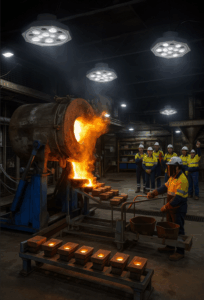
Thermal stress is one of the most significant challenges for lighting systems in hot zones. Elevated temperatures can cause irreversible damage to electronic components, degrade insulating materials, and compromise the structural integrity of fixture housings. For example, standard LED fixtures may experience lumen depreciation at temperatures above their rated thresholds, resulting in reduced brightness and uneven illumination over time. In extreme cases, thermal expansion and contraction cycles can cause solder joints and wiring connections to fail, leading to sudden fixture outages.
High thermal stress also accelerates the aging of optical components, such as lenses and diffusers, which may become discolored or brittle under prolonged exposure. This degradation reduces light quality and can create hotspots or shadowed areas, compromising both safety and operational efficiency. Addressing thermal stress requires lighting solutions specifically engineered for high-temperature environments, with heat-resistant materials, enhanced thermal management, and robust drivers capable of withstanding continuous heat exposure.
Hot zones often present challenging electrical conditions, including voltage fluctuations, surges, and intermittent power supply. These electrical instabilities can directly impact lighting performance, leading to flickering, dimming, or complete failure. Such inconsistencies are not merely inconvenient; they can pose severe safety risks. Workers relying on precise illumination for hazardous tasks may misjudge distances, miss warning indicators, or mishandle equipment, increasing the likelihood of accidents.
LED lighting systems in particular, though energy-efficient, are sensitive to electrical fluctuations if not equipped with properly rated drivers. Industrial environments benefit from smart drivers, voltage stabilizers, or surge protection devices that maintain consistent output even when power supply varies. Ensuring electrical stability is therefore a key factor in maintaining continuous, reliable lighting in high-temperature zones.
Industrial hot zones are rarely clean environments. Dust, metallic particles, chemical fumes, and corrosive gases are common, and they can significantly affect lighting stability. Dust accumulation on lenses or housings can reduce light output, create uneven illumination, and interfere with heat dissipation. Corrosive elements, particularly in chemical processing or metalworking plants, can degrade fixture materials, causing discoloration, cracks, or structural failure over time.
Protective measures, such as sealed housings with IP65 or higher ratings, corrosion-resistant coatings, and regular cleaning protocols, are essential for mitigating these risks. Ensuring lighting stability in dusty or corrosive environments not only prolongs fixture life but also maintains the uniformity of illumination, which is critical for safety.
Mechanical stress, including vibrations, shocks, and impacts, is another critical factor affecting lighting stability. Heavy machinery, conveyors, and industrial vehicles generate constant vibrations, which can loosen fixture components, damage wiring, and reduce the lifespan of the lighting system. In extreme cases, repeated mechanical stress can cause sudden fixture failure, leaving hazardous areas inadequately lit.
To address mechanical stress, industrial lighting solutions must be built with robust housings, reinforced mounting systems, and vibration-resistant components. Modular or flexible mounting designs can also help absorb shocks and prevent structural damage, ensuring long-term stability and consistent performance even in physically demanding environments.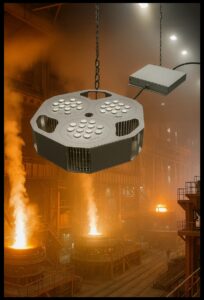
High-temperature LEDs are specifically engineered to withstand the thermal challenges of hot zones. Unlike standard LEDs, these fixtures utilize heat-resistant materials, advanced thermal management systems, and optimized heat sinks to maintain performance under extreme conditions. They offer consistent brightness, long lifespans, and energy efficiency, making them ideal for continuous operation in industrial settings. Some models are rated for operating temperatures exceeding 200°C, ensuring reliability even in the most demanding environments.
To combat dust, corrosion, and mechanical stress, protective coatings and enclosures are essential. Fixtures with IP65 or higher ratings prevent dust and moisture ingress, while corrosion-resistant coatings protect against chemical exposure. Robust enclosures also safeguard LEDs and electronic components from mechanical damage, ensuring uninterrupted operation in high-risk industrial zones. These protective measures are critical for extending fixture lifespan and maintaining consistent light output.
Modern high-temperature lighting systems often incorporate smart drivers and voltage stabilizers to maintain stable illumination despite electrical fluctuations. Smart drivers regulate current and voltage, preventing flickering or sudden outages, while voltage stabilizers compensate for inconsistent power supply. Together, these technologies ensure that lighting remains reliable, uniform, and safe, even in environments with unstable electrical infrastructure.
Redundancy and modular lighting systems are increasingly used in industrial hot zones to minimize downtime and enhance safety. By deploying multiple fixtures with overlapping coverage, facilities can maintain adequate illumination even if individual units fail. Modular designs allow for easy replacement or maintenance without shutting down entire areas, ensuring continuous operation and compliance with safety standards.
The benefits of stable lighting in hot zones extend far beyond immediate safety concerns. Reliable lighting reduces the risk of workplace accidents, which protects personnel and mitigates liability for industrial operators. It also ensures that production processes remain accurate and efficient, reducing errors, defects, and downtime.
From a financial perspective, investing in high-stability lighting solutions lowers long-term maintenance costs. Fixtures designed for high temperatures and harsh environments last longer, reducing the frequency of replacements and service interruptions. Additionally, stable lighting supports regulatory compliance, as industrial safety standards often require consistent illumination levels in hazardous areas.
Finally, maintaining lighting stability enhances operational resilience. In emergencies such as equipment failure, fires, or chemical spills, dependable illumination allows for safe evacuation, rapid response, and continued monitoring of critical processes. Overall, the benefits of stable lighting are multi-faceted, impacting safety, productivity, efficiency, and regulatory adherence.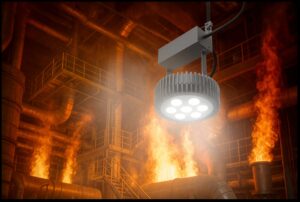
Adhering to these practices ensures long-term lighting stability and supports continuous safe operation in high-temperature industrial environments.
A steel production facility faced frequent lighting failures in its furnace area due to extreme temperatures exceeding 180°C. Conventional LED fixtures degraded rapidly, resulting in uneven illumination and increased accident reports. After switching to high-temperature LEDs with reinforced housings and smart drivers, the plant experienced a 70% reduction in maintenance downtime and a significant improvement in worker safety. Emergency egress routes remained illuminated even during electrical surges, demonstrating the critical importance of lighting stability.
A glass manufacturing plant operating kilns at 200°C faced challenges with dust accumulation on lighting fixtures, leading to dim lighting and unsafe work conditions. The installation of IP67-rated, corrosion-resistant LED fixtures with regular cleaning protocols restored consistent illumination across the hot zone. Workers reported improved visibility and efficiency, while management noted a reduction in production errors and accidents, highlighting the tangible benefits of investing in robust lighting solutions.
Lighting stability in hot zones is a critical factor for industrial safety, operational efficiency, and regulatory compliance. High temperatures, electrical fluctuations, dust, corrosive elements, and mechanical stress all pose significant challenges to standard lighting solutions. By implementing high-temperature LEDs, protective enclosures, smart drivers, and redundant systems, industrial operators can ensure consistent, reliable illumination even under extreme conditions.
The benefits are clear: reduced workplace accidents, enhanced productivity, lower maintenance costs, and compliance with safety standards. Industrial managers and engineers must prioritize lighting solutions designed for hot zones to protect personnel, maintain operational continuity, and safeguard equipment. In industrial environments where visibility is vital and conditions are harsh, lighting stability is not just an operational requirement—it is a safety imperative.
–The End–