Hazardous industrial areas present some of the most demanding operating conditions for lighting systems. Extreme ambient temperatures, corrosive chemicals, moisture, airborne dust, and continuous mechanical stress all contribute to rapid degradation of conventional luminaires. In such environments, lighting is not only a matter of visibility but also a critical component of workplace safety, operational continuity, and regulatory compliance.
Traditional lighting technologies—such as metal halide, high-pressure sodium, or standard industrial LED fixtures—often fail prematurely when exposed to harsh conditions. Common failure modes include corrosion of the housing, degradation of seals, dust ingress leading to overheating, and instability of electronic components under high ambient temperatures.
To address these challenges, specialized corrosion-proof and high-temperature LED lighting solutions have been developed specifically for hazardous areas. These luminaires are engineered to maintain stable performance under extreme conditions, ensuring reliable illumination, reduced maintenance requirements, and long-term operational safety.
This article explores the environmental challenges of hazardous areas, the technical requirements for reliable lighting, and the design principles behind corrosion-resistant and dust-proof high-temperature LED lights used in demanding industrial applications.
Lighting fixtures designed for hazardous areas must meet far stricter requirements than standard industrial luminaires. These requirements are driven by both environmental conditions and safety considerations.
Many hazardous industrial sites operate continuously at elevated ambient temperatures ranging from 75°C to over 200°C. High temperatures place significant stress on LED chips, drivers, wiring, and sealing materials. Without proper thermal design, light output degradation, color shift, and premature component failure are inevitable.
High-temperature LED lights must be designed to:
Maintain electrical stability under thermal stress
Prevent junction temperature overload
Ensure consistent luminous output during continuous operation
Corrosive environments are common in chemical plants, petrochemical facilities, coastal industries, and wastewater treatment plants. Exposure to acidic or alkaline vapors, salt spray, and industrial gases can rapidly degrade untreated metal housings and compromise structural integrity.
Corrosion-proof luminaires must feature:
Corrosion-resistant housing materials
Protective surface treatments or coatings
Sealed structures that prevent chemical ingress
Dust is not only a contamination issue but also a serious safety risk in hazardous areas. Accumulated dust can obstruct heat dissipation, increase internal temperatures, and, in some cases, create explosive atmospheres.
Effective dust protection requires:
High dust ingress protection
Robust sealing and enclosure design
Long-term resistance to dust accumulation
Hazardous areas are often difficult or dangerous to access, making frequent maintenance impractical and costly. Lighting systems must therefore be designed for long service life and minimal intervention.
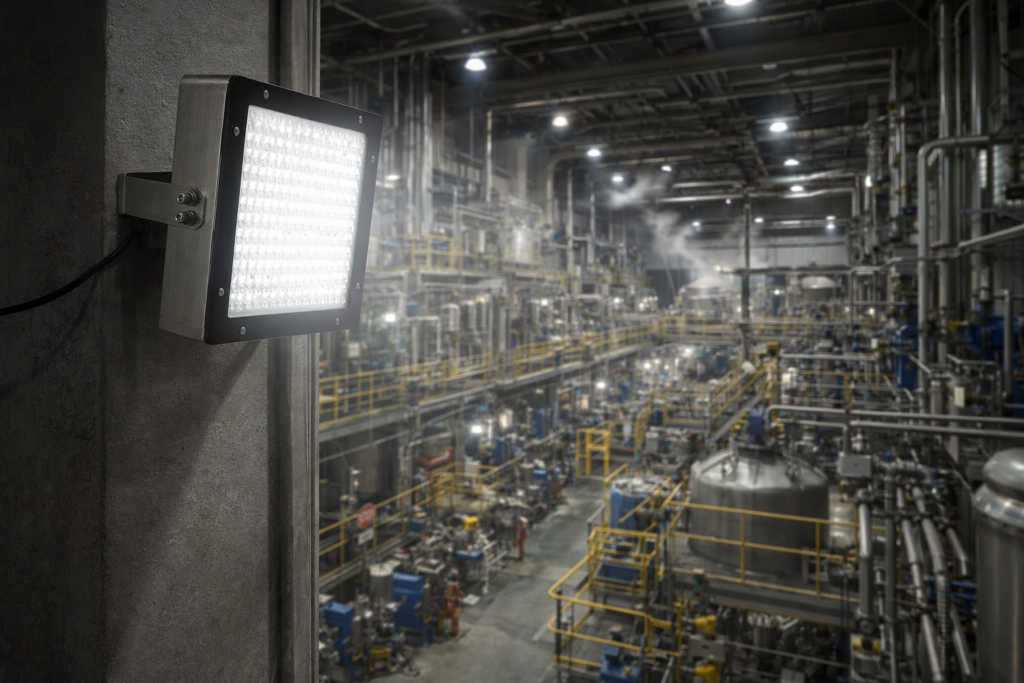
Corrosion is one of the most destructive forces affecting industrial lighting systems. In hazardous areas, corrosion is accelerated by constant exposure to chemical vapors, moisture, and temperature fluctuations. Over time, corrosion can:
Weaken the luminaire housing
Compromise seals and gaskets
Damage internal electrical components
Once corrosion penetrates the enclosure, the risk of electrical failure and safety hazards increases significantly.
Corrosion-proof LED lights are specifically engineered to withstand aggressive industrial atmospheres. Key design features include:
Corrosion-Resistant Housing Materials
The luminaire body is manufactured from materials selected for their resistance to chemical attack, such as treated aluminum alloys or specialized industrial-grade metals.
Protective Surface Treatments
Advanced anti-corrosion coatings protect the housing from oxidation, chemical erosion, and salt spray. These treatments significantly extend the service life of the fixture even in highly corrosive environments.
Sealed Structural Design
A fully sealed enclosure prevents corrosive gases, moisture, and contaminants from entering the luminaire. High-quality gaskets and sealing interfaces ensure long-term protection under thermal expansion and contraction.
Corrosion-proof LED lights are often installed in environments where corrosion and high temperature coexist. These luminaires incorporate:
Heat-resistant internal components
Optimized thermal pathways to dissipate heat efficiently
Drivers and wiring designed for elevated ambient temperatures
As a result, they maintain stable light output, electrical reliability, and mechanical integrity even under prolonged high-temperature operation.
Corrosion-proof high-temperature LED lights are widely used in:
Chemical processing plants
Petrochemical and refinery facilities
Offshore platforms and coastal industrial zones
Wastewater treatment and desalination plants
In these environments, corrosion resistance is essential to ensuring safe and uninterrupted lighting performance.
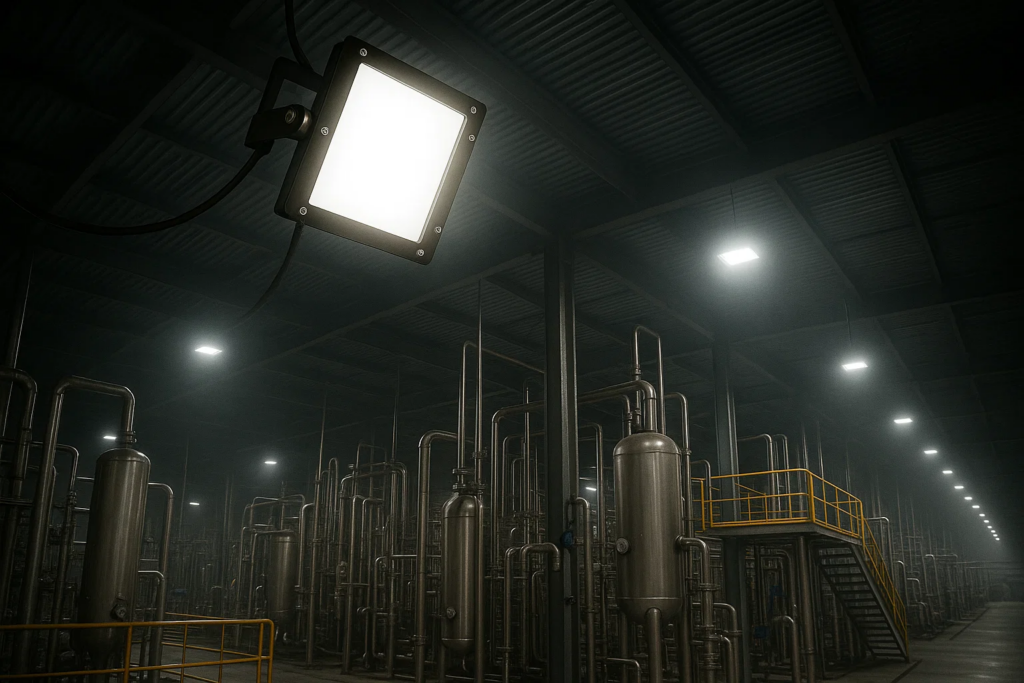
Dust is a critical hazard in many industrial settings, particularly where fine particles are present. Cement dust, metal particles, paper fibers, and combustible dust can accumulate on lighting fixtures, leading to:
Blocked ventilation and heat dissipation
Increased internal temperatures
Reduced lifespan of LEDs and drivers
In certain environments, dust accumulation also poses an ignition risk, making dust-resistant lighting essential for safety.
Dust-proof LED lights for hazardous areas are designed with a focus on enclosure integrity. Key design elements include:
High-Level Dust Sealing
The luminaire enclosure is engineered to prevent dust ingress, protecting internal components from contamination.
Reinforced Mechanical Structure
A robust housing design ensures resistance to vibration, mechanical impact, and thermal expansion.
Protection of Critical Components
LED modules, drivers, and electrical connections are isolated from external dust exposure, maintaining stable operation over time.
Dust-proof luminaires in hazardous areas must also perform reliably at high ambient temperatures. This is achieved through:
Optimized heat dissipation structures
Heat-resistant materials for internal components
Electrical systems designed for thermal stability
Even in environments with heavy dust and continuous heat exposure, these luminaires deliver consistent illumination without performance degradation.
Dust-proof high-temperature LED lights are commonly installed in:
Cement plants and silos
Paper mills and pulp processing facilities
Steel mills and metal fabrication plants
Mining and material handling facilities
In these applications, dust resistance and thermal endurance are critical for operational safety and efficiency.
The use of corrosion-proof and dust-proof high-temperature LED lights in hazardous areas provides significant advantages:
Reliable illumination improves visibility, reduces workplace accidents, and supports safe equipment operation in hazardous environments.
Long service life and robust construction minimize the need for frequent replacements or repairs, reducing downtime and maintenance costs.
Engineered thermal management and protective designs ensure consistent light output even under extreme environmental stress.
Although specialized hazardous-area LED lights may have a higher initial cost, their durability and efficiency deliver substantial long-term savings.
Selecting the appropriate LED lighting solution depends on the specific environmental challenges of the site:
Corrosive environments require corrosion-proof luminaires with advanced protective coatings
High-dust environments demand dust-proof enclosures with reliable sealing
High-temperature zones require luminaires rated for the actual ambient temperature conditions
In many facilities, a combination of corrosion resistance, dust protection, and high-temperature capability is necessary. Customized lighting solutions often provide the best performance and longevity.
Hazardous industrial environments demand lighting solutions that go far beyond standard industrial fixtures. Corrosion-proof and high-temperature LED lights, along with dust-proof designs, provide the reliability, safety, and durability required for continuous operation in extreme conditions.
By addressing the challenges of corrosion, dust, and high ambient temperatures, these specialized LED luminaires help industrial operators maintain safe working environments, reduce maintenance burdens, and achieve long-term operational efficiency.
As industrial processes continue to evolve and environmental demands become more severe, engineered hazardous-area LED lighting solutions will remain a critical component of modern industrial infrastructure.