High-heat industrial environments, such as steel mills, glass manufacturing plants, foundries, and chemical processing facilities, present some of the most challenging working conditions in modern industry. These areas are characterized by extreme temperatures, intense machinery operations, and the presence of molten materials or highly reactive chemicals. In such settings, even small lapses in safety protocols can lead to catastrophic outcomes, making the reliability and quality of workplace lighting a crucial factor in operational safety.
Industrial lighting is more than a matter of visibility; it is a foundational component of safety, productivity, and compliance. Poor illumination can increase the likelihood of accidents, slow down operational efficiency, and lead to costly downtime. Traditional lighting systems, such as high-intensity discharge (HID), metal halide, or fluorescent lamps, often struggle to perform optimally under extreme heat conditions, frequently generating additional heat themselves and requiring high levels of maintenance.
Modern LED lighting technology provides a compelling solution to these challenges. LEDs offer superior heat resistance, energy efficiency, durability, and consistent light output, making them an ideal choice for high-heat industrial applications. This article explores the ways in which LED lighting can improve safety in these demanding environments, the technological advantages they offer, practical implementation strategies, and real-world examples of successful applications.
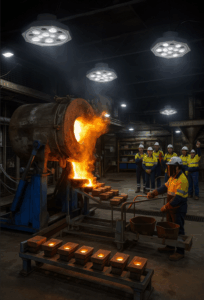
Extreme Temperatures Industrial facilities frequently operate at temperatures exceeding 40°C (104°F), with localized areas near furnaces, kilns, or chemical reactors reaching significantly higher levels. Such conditions accelerate equipment degradation, increase energy consumption, and impose physical stress on workers. Conventional lighting systems, often designed for moderate temperature ranges, can experience reduced lifespan, light output degradation, or complete failure when exposed to sustained high heat.
Harsh Working Conditions High-heat environments are often accompanied by dust, smoke, corrosive vapors, and mechanical vibrations. These factors can compromise lighting fixtures that are not specifically engineered for industrial use. Accumulation of particulate matter on lenses, exposure to chemical fumes, and constant vibration from heavy machinery reduce lighting efficiency and contribute to safety hazards.
Safety Risks Insufficient lighting significantly heightens the risk of workplace accidents. Workers may misread gauges, overlook hazards, or misjudge distances when handling heavy machinery. A poorly lit area can lead to trips, slips, falls, or more severe incidents such as burns and chemical exposure. The direct correlation between visibility and accident prevention underscores the need for reliable illumination in industrial settings.
Energy and Heat Concerns Traditional lighting technologies often produce excess heat while consuming significant amounts of electricity. For example, metal halide lamps can consume upwards of 400W each, generating substantial thermal output that exacerbates the already high ambient temperatures. The resulting heat adds stress to both personnel and equipment and contributes to higher cooling costs within the facility.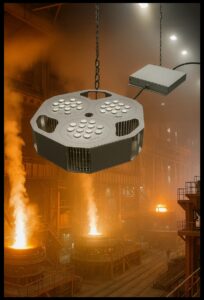
Enhancing Visibility and Accuracy Proper lighting is essential for workers to accurately monitor machinery, read instruments, and navigate complex industrial spaces. Uniform, high-quality illumination reduces the likelihood of errors that could result in accidents or product defects. A well-lit workspace allows employees to perform precise tasks with confidence, even in challenging high-heat conditions.
Reducing Fatigue Dim or flickering lighting contributes to eye strain, headaches, and cognitive fatigue, which can impair decision-making and reduce situational awareness. LEDs with stable light output and appropriate color temperatures can significantly reduce worker fatigue, allowing for sustained focus and increased productivity.
Supporting Emergency Preparedness Industrial facilities with high-temperature operations carry inherent risks, including fire, chemical spills, or mechanical failures. Reliable lighting systems are critical in emergencies, guiding employees to exits, illuminating safety equipment, and supporting emergency response protocols. Rapid, clear visibility can mean the difference between a safe evacuation and a catastrophic incident.
Compliance with Safety Standards Occupational safety authorities worldwide, such as OSHA in the United States and ISO standards internationally, require minimum illumination levels to ensure worker safety. Proper industrial lighting not only helps comply with these regulations but also demonstrates a company’s commitment to workplace safety, reducing liability and insurance risks.
High Heat Resistance LEDs designed for industrial applications are capable of withstanding temperatures well above 60°C (140°F), with some models engineered for operation in environments exceeding 75°C (167°F). Heat-resistant housings, thermal management systems, and specialized heat sinks ensure LEDs maintain optimal performance, even when mounted near furnaces or hot processing equipment.
Energy Efficiency LEDs provide significant energy savings compared to traditional lighting technologies. A 100W LED fixture can replace a 250–400W HID lamp, maintaining similar or superior illumination while consuming 60–75% less energy. Reduced energy consumption also decreases operational heat, indirectly improving workplace comfort and lowering cooling costs.
Durability and Longevity LEDs are solid-state devices, inherently resistant to vibration, shock, and thermal cycling—common conditions in industrial settings. Lifespans exceeding 50,000 hours are typical, meaning LED fixtures require fewer replacements and maintenance interventions. This durability translates into lower total cost of ownership and uninterrupted illumination, critical in high-risk environments.
Consistent and Instant Light Output LEDs provide instant full brightness without warm-up time and maintain consistent illumination over their operational lifespan. This reliability prevents sudden dark spots or flickering that could compromise safety and ensures continuous visibility for workers operating in hazardous zones.
Flexible Installation Options LEDs are available in high-bay fixtures, linear lighting, task lighting, and portable units, enabling tailored lighting layouts that address specific industrial requirements. Whether illuminating large open areas or focused workstation zones, LED systems can be configured to optimize both visibility and energy efficiency.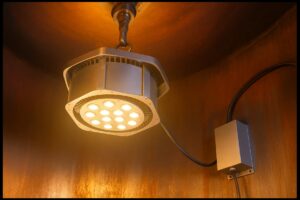
Steel Mill Implementation A major steel production facility in the United States retrofitted its existing 400 high-wattage metal halide lamps with 150 industrial-grade LED high-bay fixtures. The results were profound: energy consumption decreased by 55%, maintenance interventions dropped by 40%, and reported workplace accidents associated with poor visibility fell by 28% within one year. Workers also reported enhanced comfort and reduced eye strain.
Glass Manufacturing Facility In a European glass manufacturing plant, LEDs were installed near high-temperature glass furnaces to improve visibility during precision shaping operations. The new lighting system enhanced worker accuracy, reduced errors in glass forming, and minimized the risk of burns. Eye strain and fatigue reports among employees decreased markedly, illustrating the health benefits of well-designed industrial lighting.
Chemical Processing Plant A chemical processing plant with multiple high-temperature reactors implemented LED lighting to enhance emergency preparedness and daily operations. During an emergency evacuation drill, employees reached designated safety zones 35% faster than during previous drills under older lighting systems. This case underscores the importance of reliable, high-intensity illumination in supporting emergency protocols and safeguarding human life.
Temperature Ratings Industrial LEDs should be rated to withstand maximum ambient temperatures plus localized heat sources. For most high-heat industrial environments, LEDs with a thermal tolerance of 60–75°C are recommended to ensure long-term operational stability.
Ingress Protection (IP) and Impact Ratings (IK) High IP and IK ratings indicate resistance to dust, moisture, and mechanical impact. IP65 or higher ensures protection against dust ingress and water jets, while IK08 or higher confirms the fixture’s ability to withstand mechanical shocks and vibrations common in industrial settings.
Color Temperature and CRI Color temperature affects both visibility and comfort. Daylight-equivalent LEDs (5000–6500K) with a high Color Rendering Index (CRI >80) enable accurate perception of colors, materials, and instrument readings, critical for precision tasks and quality control.
Maintenance and Modularity Industrial LEDs should be easy to maintain, with modular designs allowing for quick replacement of individual components. Reduced maintenance downtime translates to uninterrupted operations, lower labor costs, and safer working conditions.
Regulatory Compliance LED fixtures should comply with relevant occupational safety and performance standards, such as OSHA, UL, CE, or IEC certifications. Compliance ensures that the lighting system has been tested for high-heat industrial conditions and meets rigorous safety criteria.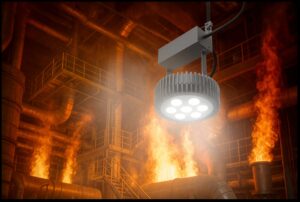
Optimized Lighting Layouts Proper layout planning ensures uniform illumination, eliminates shadows, and highlights critical work areas. Advanced software simulations can model lighting levels and fixture placement to achieve optimal lux levels and uniformity across the facility.
Retrofitting Existing Infrastructure LED retrofits can integrate seamlessly with existing mounting hardware and control systems, minimizing installation disruption. Retrofitting is often more cost-effective than a full replacement and allows phased implementation without halting operations.
High-temperature LED lighting demands careful thermal management to maintain efficiency, color fidelity, and long operational life. Combining high-conductivity materials, advanced heat sink designs, active and hybrid cooling, and simulation-driven engineering allows designers to meet the challenges of extreme environments. Emerging materials like graphene, phase-change compounds, and AI-controlled thermal systems promise further improvements in performance and reliability.
As industrial and cinematic applications continue to push thermal limits, the integration of intelligent thermal design and predictive maintenance will become the standard, ensuring high-performance LEDs remain a viable solution even in the harshest conditions.
–The End–