
In modern commercial and professional fishing operations, lighting technology plays a critical role in improving efficiency, safety, and overall catch performance. Among various solutions available on the market, LED fishing lights have become the preferred choice for fishing boats, vessels, crafts, and ships operating in deep water and offshore environments.
Traditional fishing lamps often suffer from high energy consumption, limited service life, poor waterproof performance, and unstable operation in harsh marine conditions. In contrast, LED fishing lights offer high brightness, low power consumption, long lifespan, and superior waterproof capabilities, making them ideal for deep water diving applications.
As fishing activities continue to expand into deeper waters and longer night operations, the demand for high-power, pressure-resistant, corrosion-resistant underwater LED fishing lights is increasing rapidly. These lights are no longer optional accessories but essential tools for professional fishing fleets worldwide.
Deep water fishing presents unique environmental and operational challenges that standard lighting equipment cannot handle effectively. Understanding these challenges helps explain why specialized LED fishing lights are required.
As depth increases, water pressure rises significantly. At 50 meters below the surface, underwater lighting fixtures must withstand continuous pressure without deformation, leakage, or structural failure. Any weakness in sealing design or material selection may result in water ingress and permanent damage.
Sunlight penetration decreases rapidly underwater. In deep or turbid waters, visibility is extremely limited, especially during night fishing. Powerful artificial lighting is required to create an effective illumination zone capable of attracting fish.
Sea water contains salt, minerals, and microorganisms that accelerate corrosion. Metal components, lenses, and cable connections must be specifically designed to resist corrosion and oxidation over long-term exposure.
Underwater temperatures can vary significantly depending on depth and location. Lighting equipment must operate reliably in both cold deep water and warmer surface conditions while maintaining stable light output and thermal balance.
Commercial fishing vessels often operate lights continuously for many hours or even days. This requires LED fishing lights to maintain consistent performance without overheating, flickering, or brightness degradation.
To function reliably in deep water environments, LED fishing lights must meet strict technical and structural requirements.
High-quality LED fishing lights are designed with IP68-rated waterproof structures, ensuring complete protection against water ingress during long-term submersion.
Key design elements include:
Multi-layer sealing systems
Waterproof cable glands and connectors
Precision-machined housings
Pressure-tested structures suitable for depths of 30–50 meters or more
These features allow the light to operate safely under constant water pressure without compromising internal electronics.
Deep water fishing requires strong illumination to penetrate dark underwater environments. High-power LED fishing lights, typically ranging from 300W to 500W, provide sufficient lumen output to create an effective attraction zone.
High brightness ensures:
Greater light penetration depth
Wider illumination coverage
Faster concentration of fish around nets or lines
Modern LED chips deliver high lumen efficiency while maintaining energy savings compared to traditional light sources.
Material selection directly impacts product lifespan and reliability. Professional LED fishing lights usually feature:
Aluminum alloy housings for excellent heat dissipation
Tempered glass lenses for impact and pressure resistance
Marine-grade anti-corrosion coatings
This construction ensures mechanical stability even in rough sea conditions and protects the light from physical damage during deployment and retrieval.
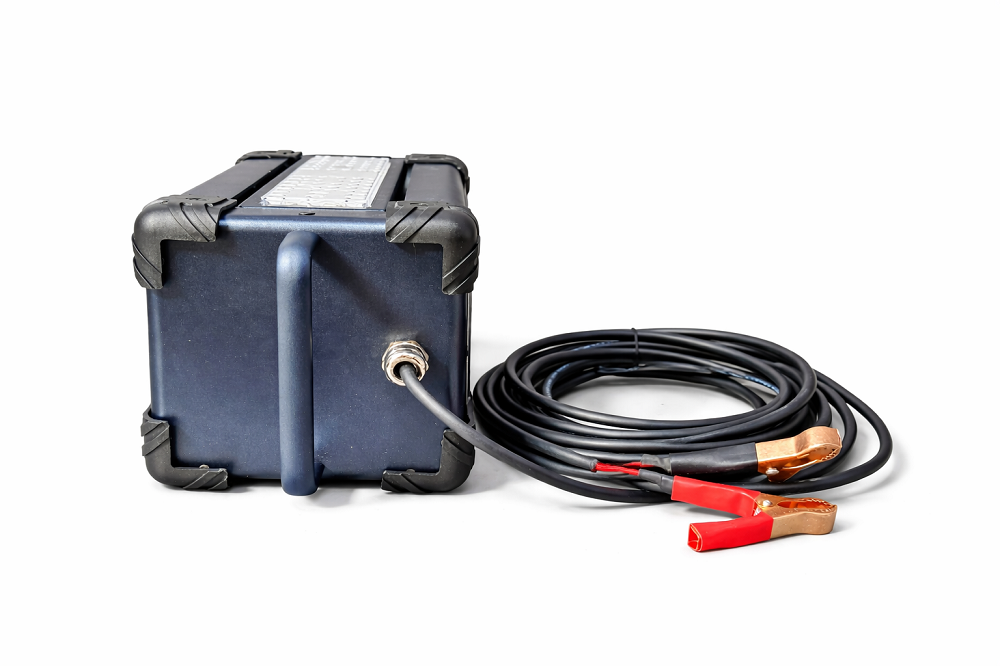
Safety is critical in underwater electrical equipment. LED fishing lights typically operate on low-voltage DC power (12V or 24V), significantly reducing electrical risk.
Additional safety features may include:
Short-circuit protection
Overvoltage and overcurrent protection
Stable current drivers to prevent flicker and LED damage
These measures ensure reliable operation even when power supply conditions fluctuate on board.
Understanding the working principles of LED fishing lights helps explain their effectiveness in both sea water and fresh water environments.
Light behaves differently underwater than in air. Water absorbs and scatters light, reducing brightness and changing color intensity as depth increases.
High-intensity LED fishing lights compensate for this loss by:
Producing strong initial light output
Using optimized beam angles for underwater dispersion
Maintaining consistent brightness over long distances
This allows light to reach deeper zones and remain visible to fish even in low-visibility conditions.
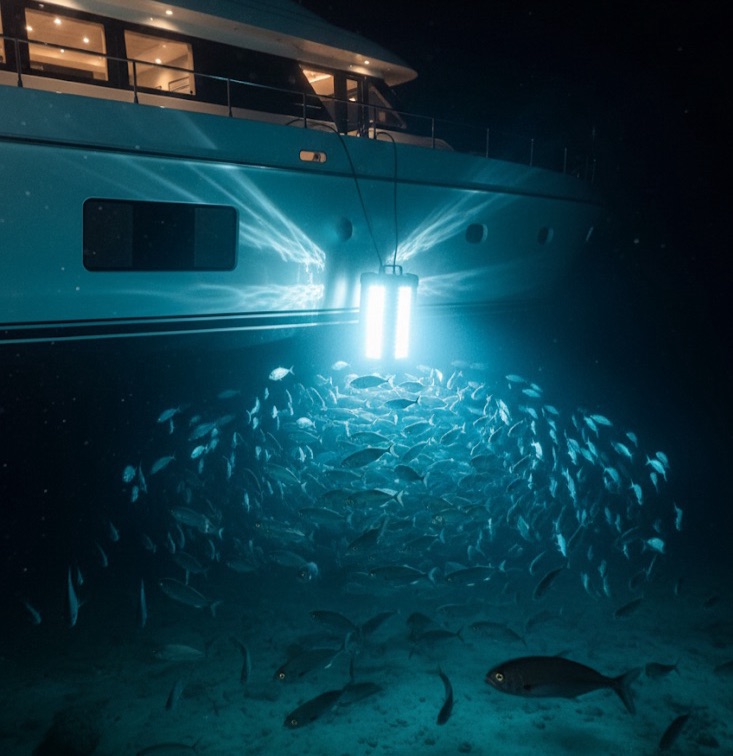
Most fish species exhibit phototaxis, meaning they are naturally attracted to light. When underwater LED fishing lights are activated:
Light attracts plankton and microorganisms
Small fish gather to feed on plankton
Larger predatory fish follow
This chain reaction significantly increases fish density around the illuminated area, improving catch efficiency.
Different light colors may be used depending on fishing methods and target species. Green, blue, and white lights are commonly selected for their penetration ability and attraction effectiveness underwater.
While the working principle remains the same, environmental differences require careful design consideration.
In sea water:
Corrosion resistance is critical
Sealing materials must resist salt degradation
Housing coatings must prevent oxidation
In fresh water:
Lower corrosion risk
Slightly different light penetration characteristics
Thermal dissipation remains important
High-quality LED fishing lights are designed to perform reliably in both sea water and fresh water without performance loss.
LED fishing lights have become indispensable equipment for modern fishing vessels of all sizes.
By attracting fish directly to the fishing zone, LED fishing lights:
Reduce search time
Increase catch rates
Improve overall productivity
This leads to better operational efficiency and higher economic returns.
For offshore and deep-water fishing, natural light is insufficient or completely unavailable. LED fishing lights provide reliable illumination that supports:
Night fishing
Deep-water net fishing
Long-duration offshore operations
They enable vessels to operate effectively regardless of time or lighting conditions.
Compared to traditional fishing lamps, LED technology offers:
Lower power consumption
Reduced fuel or generator load
Longer service life
Lower maintenance and replacement frequency significantly reduce operating costs over time.
LED fishing lights can be installed on:
Hull sides
Submerged mounting positions
Fishing nets or frames
Their compact design and low-voltage operation make them suitable for small crafts as well as large commercial ships.
Professional LED fishing lights are widely used in:
Commercial fishing boats
Offshore fishing vessels
Small fishing crafts
Aquaculture and fish farming operations
Marine research and underwater observation
Their versatility makes them valuable tools across multiple marine industries.
As fishing operations continue to move into deeper waters and demand higher efficiency, LED fishing lights have become essential equipment for modern marine vessels. Their ability to withstand high pressure, resist corrosion, deliver powerful illumination, and operate safely underwater makes them the ideal solution for deep water diving applications.
Choosing a reliable, high-quality LED fishing light not only improves fishing performance but also enhances operational safety and long-term cost efficiency. With continuous advancements in LED technology and underwater design, LED fishing lights will remain a key component of professional fishing operations worldwide.