High-temperature, dust-proof LED systems have transformed illumination strategies in extreme industrial environments where heat, particulate matter, and mechanical stress exceed the thresholds tolerated by conventional luminaires. In facilities such as steel mills, cement plants, smelters, glass factories, and mining sites, lighting fixtures are routinely exposed to ambient temperatures reaching 90°C, 150°C, and in severe cases 200°C. Dust concentration often surpasses levels that compromise the sealing integrity of traditional fixtures. Under these conditions, standard HID or fluorescent lamps experience rapid lumen decay, component degradation, and frequent catastrophic failure.
This white paper provides a comprehensive technical analysis of how specialized high-temperature, dust-proof LED systems maintain reliability, lumen stability, and electrical safety under these extreme conditions. It details the engineering principles behind thermal management, encapsulation, materials science, environmental sealing, and vibration-resistant mechanical design. It presents test methodologies for validating performance (thermal cycling, ingress protection, accelerated lifetime testing) and explains how to interpret laboratory data relative to field behavior. Real-world case studies from steel, cement, and glass manufacturing demonstrate quantifiable improvements in energy efficiency, safety visibility, maintenance reduction, and total cost of ownership (TCO).
Readers will gain strategic insights into selecting, installing, and maintaining industrial-grade LEDs for the harshest operational environments. This includes procurement checklists, standards compliance frameworks (IEC, UL, NEMA, ATEX/IECEx), and ROI modeling to guide decision-making. The aim is to equip industrial engineers, plant operators, EHS professionals, and procurement teams with a complete, data-backed understanding of how high-temperature, dust-proof LED systems deliver long-term value in the world’s most challenging workplaces.
2.1 Defining High-Temperature and Dust-Proof LED Technology
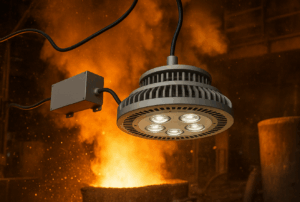
In industrial illumination, “high-temperature LED systems” refer to luminaries specifically engineered to sustain steady-state operation in ambient temperatures ranging from 80°C to 200°C, even when exposed to intense radiant heat from nearby furnaces or kilns. These systems use high-temperature LED chipset architectures, thermal-optimized metal or ceramic substrates, heat-tolerant drivers, and materials capable of withstanding accelerated thermal aging.
“Dust-proof” refers to luminaires designed with hermetically sealed or pressure-resistant enclosures that prevent the ingress of fine particles, abrasive dust, or chemically active particulates. Industrial dust—such as cement powder, fly ash, metallic oxide dust, silica particulates, and mineral fines—poses risks of electrical shorts, thermal insulation buildup, and optical surface contamination. Therefore, dust-proof LEDs typically comply with IP66, IP67, IP68, or IP69K ratings, indicating resistance not only to dust but also to high-pressure water exposure.
2.2 The Industrial Need for Extreme-Environment Lighting
Industrial processes increasingly involve high-temperature zones and particulate-heavy environments due to thermal manufacturing operations, mechanical grinding, chemical reactions, and material handling. Poor lighting in these zones leads to:
LEDs engineered for extreme conditions offer profound operational benefits: stable illumination for worker safety, energy efficiency superior to HID, long service lifetimes, and reduced maintenance workloads in hazardous zones where access is difficult and costly.
2.3 Scope of the Article
This paper examines the full life cycle of high-temperature, dust-proof LED systems, from engineering design to field deployment and lifetime economics. Each chapter expands on:
3.1 Heat-Intensive Industrial Zones
Steel Mills and Foundries
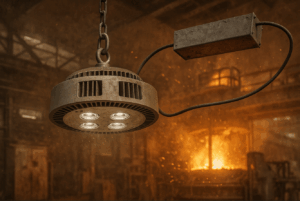
Manufacturing zones near blast furnaces, hot rolling mills, reheat furnaces, and ladle transfer lines routinely exceed 120°C ambient with radiant heat spikes above 250°C. Airborne metallic dust and oil vapors further increase stress on lighting systems.
Glass and Ceramics Production
Glass furnace zones create persistent radiant heat loads above 150°C. Thermal shock events happen frequently due to furnace door operations or process cycling.
Cement Plants
Cement kilns generate extreme dust concentrations. Raw material grinding produces abrasive, alkaline dust that infiltrates improperly sealed luminaires, reducing life cycles to weeks.
Mining and Mineral Processing
Mines generate fine mineral particulates pervasive enough to coat luminaires within days. High vibration, corrosive minerals, and thermal stress are common.
3.2 Environmental Stressors
3.3 Operational Consequences of Lighting Failure
Failure in high-temperature zones results in:
Long-lasting LED luminaires engineered for these environments mitigate these costly disruptions.
4.1 Thermal Management Principles
4.1.1 LED Heat Generation
The fundamental heat contributors include:
Unlike HID, LED efficiency is highly sensitive to junction temperature (Tj). Keeping Tj below 120–150°C is essential for long-term operation.
4.1.2 Thermal Path Architecture
Industrial LED luminaires utilize a multi-stage heat dissipation architecture:
High-temperature LEDs often incorporate die-attached materials rated beyond 200°C, ensuring mechanical stability and reliable heat transfer.
4.2 Dust-Proofing Technologies
4.2.1 Ingress Protection (IP) Requirements
Dust-proof LEDs typically adhere to:
IP69K dust-proof LEDs are ideal for cement, mining, and metalworking environments.
4.2.2 Dust-Sealing Components
4.3 High-Temperature Materials Science
To withstand high ambient and radiant temperatures, luminaires employ:
4.4 Vibration-Resistant Mechanical Engineering
High-vibration designs include:
5.1 Key Metrics for Evaluation
5.2 Test Methodologies
5.3 Interpretation of Lab vs Field Data
Lab results are stable and controlled; field results include:
Thus, long-term reliability evaluations must incorporate both controlled testing and multi-month field trials.
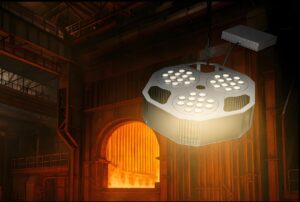
6.1 Steel Mill — 150–200°C Ambient Zones
Standard HID fixtures failed bi-monthly due to thermal burnout. After replacing with 200°C-rated LED luminaires:
This reduced crane-assisted maintenance by nearly 90%.
6.2 Cement Processing — Extreme Dust Contamination
Dust ingress clogged and shorted conventional lights. IP69K LEDs with PTFE vents provided:
6.3 Glass Production — Radiant Heat & Shock
LED systems near furnace doors suffered from thermal shock and lens cracking. Upgraded borosilicate-lens fixtures delivered:
7.1 Pre-Install Site Survey
A thorough survey includes:
7.2 Installation Guidelines
7.3 Maintenance Strategies
High-temperature, dust-proof LED luminaires comply with:
For explosive dust or gas environments, ATEX and IECEx certifications are mandatory.
9.1 Cost Components
9.2 5-Year ROI Model Example
Replacing 400W HID with 200W LED:
Energy Savings:
~$210/year per fixture
Maintenance Savings:
~$300–$800/year
Total Annual Savings:
~$510–$1,010 per fixture
Typical ROI:
9–14 months
TCO reduction: >60% in 5 years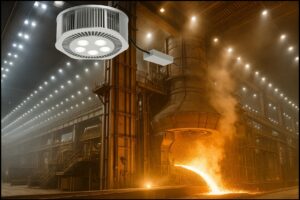
10.1 Design Tradeoffs
10.2 Selection Decision Checklist
High-temperature, dust-proof LED systems represent a pivotal advancement for illumination in extreme industrial environments. Through optimized thermal engineering, dust-sealing architectures, high-temperature materials, and vibration-resistant mechanical structures, these luminaires operate safely and reliably in ambient temperatures up to 200°C and in dust-laden zones where conventional lighting rapidly fails.
Industries adopting these systems benefit from significant energy savings, enhanced operational safety, reduced downtime, and extended fixture lifetimes. As materials science and LED technology continue to evolve, next-generation luminaires will deliver even higher efficiency, smarter diagnostics, and greater resilience—solidifying their role as the standard for extreme industrial lighting.
–The End–