
In every image captured beneath the waves, light is more than a technical necessity — it’s the silent storyteller. It shapes color, texture, and emotion, transforming the ocean’s depth into a cinematic masterpiece. From coral reefs glowing in pastel hues to divers emerging from deep-blue shadows, light defines how underwater scenes are perceived and remembered.
For decades, underwater filmmakers and photographers relied on cumbersome halogen or HID systems. These early lights were heavy, power-hungry, and limited in control. The arrival of LED technology changed everything — smaller bodies, cooler operation, and dramatically higher efficiency. Yet even standard white LEDs couldn’t fully restore the true vibrancy of the underwater world.
Enter the new generation: RGBWW full-spectrum LED technology. Combining Red, Green, Blue, Warm White, and Cool White diodes in one intelligent system, RGBWW lighting delivers lifelike color balance, cinematic flexibility, and creative control like never before.
From professional production crews to content creators and live-streaming divers, RGBWW underwater lights are transforming how creators capture the unseen — revealing not just what’s beneath the surface, but what’s possible beyond imagination.

RGBWW stands for Red, Green, Blue, Warm White, and Cool White, a configuration that merges full-spectrum color versatility with precise white light rendering. Traditional RGB lights create color by mixing red, green, and blue channels, but they often struggle with neutral tones and color accuracy — particularly underwater, where natural hues are easily distorted.
By adding two dedicated white channels, RGBWW systems achieve perfect balance between creativity and realism. The warm and cool white LEDs fill in the spectral gaps, ensuring smoother transitions, natural skin tones, and consistent color fidelity across all lighting scenarios.
Standard RGB fixtures are designed primarily for visual effects, not accurate illumination. Bi-color models (typically adjustable between 2700K and 6500K) improve flexibility but still lack the color richness required for true-to-life underwater imaging.
RGBWW, however, combines both advantages:
Water absorbs and scatters light — red first, then orange and yellow — leaving predominantly blue and green tones. This distortion makes artificial lighting essential for restoring color balance. A high-quality RGBWW light can compensate for lost wavelengths, reviving the reds of coral, the golds of fish scales, and the subtle tones of skin or equipment.
Behind the magic of RGBWW lies sophisticated color science. Advanced onboard processors constantly calculate optimal blending ratios between RGB and white channels, ensuring even output and smooth gradation. This precision enables filmmakers to create consistent visual styles whether shooting at the surface or 30 meters deep.
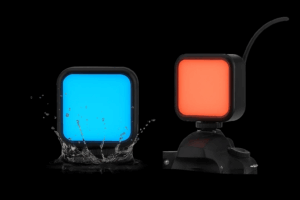
Light behaves differently underwater. Every meter of depth reduces brightness and alters spectrum distribution. Reds disappear after just a few meters; blues dominate the scene. For creators, this means that lighting must not only illuminate but rebuild color reality — a task that only full-spectrum LEDs can accomplish effectively.
2. Depth, Turbidity, and Backscatter
Underwater lighting must contend with suspended particles that reflect and scatter light, known as backscatter. This can cloud footage and obscure subjects. RGBWW lights with adjustable beam angles, diffusion filters, and high-lumen output help reduce backscatter and maintain image clarity even in challenging visibility conditions.
3. Thermal Management and Pressure Resistance
Unlike air, water draws heat away quickly — but electronic components still need consistent temperature control. High-end underwater lights incorporate intelligent cooling systems and sealed aluminum housings that balance heat dissipation with watertight protection, ensuring stable performance in long shoots.
4. The Need for Consistent, Controllable Light Sources
From macro photography to wide-angle videography, precision control is vital. Flicker-free dimming, stable color temperature, and adjustable beam spread allow professionals to fine-tune lighting without compromising exposure or tonal balance. For live streamers and vloggers, this level of control ensures their underwater content remains visually stunning and production-ready.
RGBWW lights unlock an entire universe of creative expression. Imagine painting a coral reef in cinematic amber, lighting a diver in vivid teal, or mimicking moonlight for night dives. Every hue becomes a storytelling element. Through intuitive controls or mobile apps, users can select millions of shades, smoothly transition between tones, or sync lighting effects to movement or sound.
2. Dynamic Lighting Effects
Today’s professional-grade underwater lights integrate DMX512, Bluetooth, or app-based control systems, allowing synchronized lighting for complex scenes. Cinematographers can pre-program fades, flashes, or ambient transitions, creating dynamic underwater environments previously only possible in studio settings.
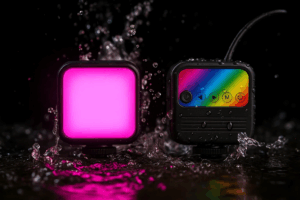
3. Enhanced Portability and Power Efficiency
Efficiency defines modern lighting. Compact RGBWW units consume minimal power while delivering exceptional output. Models ranging from 20W pocket lights to 100W handhelds are perfect for vloggers and divers. For larger-scale productions, 2000W–20,000W fixtures illuminate entire underwater sets — all with high efficacy and extended runtime.
4. Hybrid Functionality
The new generation of underwater lights transcends boundaries. With robust sealing and adaptive cooling, they perform equally well on land and underwater, enabling creators to maintain consistent visual tones across environments — a crucial advantage for hybrid content production.
5. Sustainability and Longevity
Beyond performance, sustainability matters. RGBWW LEDs are engineered for long lifespans, reduced energy waste, and recyclable design. Their high luminous efficiency means lower power draw and smaller carbon footprints — a responsible choice for professionals committed to both creativity and environmental care.
Underwater reliability begins with construction. Aerospace-grade aluminum alloy housings resist corrosion while maintaining lightweight strength. High-precision O-ring systems and multi-layer seals deliver IP68 or IP69K waterproof ratings, ensuring consistent operation at depths up to 30 meters and beyond.
2. Thermal Dissipation and Circuit Protection
Sophisticated thermal regulation systems detect internal temperature changes, automatically adjusting output to protect LED modules and circuitry. This safeguards performance and prevents overheating — critical for continuous operation in demanding shoots.
3. Optical Design and Beam Control
Each lens and diffuser is optimized for light transmission underwater. Wide-angle diffusers enable soft, even coverage for ambient scenes, while spot lenses focus intensity for subject illumination. Advanced anti-reflective coatings minimize internal glare, maximizing luminous efficiency.
4. Control Interfaces and Connectivity
Next-generation RGBWW lights embrace both professional and creator workflows. With DMX512, remote control panels, and wireless app synchronization, users can switch modes, adjust intensity, or modify hue instantly — even mid-dive.
5. Modular Ecosystems
From handheld mounts and tripods to ROV integrations, modular accessories empower users to expand functionality. Whether a diver wants to attach filters, arms, or camera brackets, modularity ensures adaptability across countless filming scenarios.
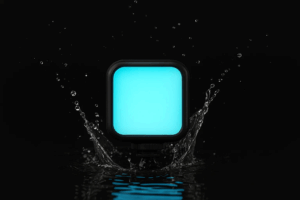
For film and TV crews, RGBWW underwater lights open up new narrative dimensions. Directors can now shape mood and tone directly underwater — blending colors to evoke suspense, tranquility, or wonder. Their precise color control and consistent output make them indispensable for modern production pipelines.
2. Content Creators and Streamers
The rise of underwater influencers and live-streamers has redefined what “content creation” means. Compact, app-controlled RGBWW lights allow creators to broadcast in real-time from beneath the surface — with the same vibrant quality expected in studio conditions.
3. Scientific and Industrial Uses
Researchers and inspectors depend on accurate lighting to record and analyze marine environments. RGBWW lights enhance visibility, improve image contrast, and provide true color representation critical for habitat mapping, pipeline inspection, or archaeological documentation.
4. Recreational and Artistic Photography
For artists and enthusiasts, RGBWW lighting offers boundless creative experimentation — surreal portraits, bioluminescent-inspired visuals, and color-drenched underwater art installations. The flexibility of full-spectrum lighting transforms every dive into a canvas.
5. Cross-Environment Utility
When the dive ends, the creativity continues. Many modern underwater lights double as studio, outdoor, or event lighting, allowing professionals to streamline their gear while maintaining consistent output across shooting conditions.
Compact underwater lights like the Hydrolux LS-ARE-VD1 demonstrate how advanced technology can fit in the palm of your hand. Designed for vloggers and divers, these lights combine RGBWW color science, USB-C charging, and IP68 sealing — offering brilliant illumination in a portable, durable package.
2. Professional-Grade Illumination — 2000W to 20,000W Systems
For large-scale film productions or marine engineering projects, high-output RGBWW systems deliver the strength to illuminate vast underwater spaces. Their precision optics and DMX control provide consistent, flicker-free light ideal for cinema-grade work.
3. Deep-Dive Performance
Lights engineered for 30-meter depth rating maintain stable brightness and color accuracy even in high-pressure environments. Their robust housings and double-sealed glass lenses guarantee safety and dependability.
4. Integration with Cameras and ROVs
As underwater drones and robotic vehicles gain popularity, RGBWW lights are becoming essential accessories. They provide clear, adjustable illumination for inspection, research, or cinematic exploration in locations unreachable by divers.
RGBWW technology isn’t just an upgrade — it’s a transformation of creative potential. By merging precision engineering with artistic flexibility, these lights allow creators to compose scenes underwater with the same expressive control they enjoy in studio lighting.
Color becomes narrative. Light becomes language.
Through adjustable hues and temperature tuning, cinematographers can portray the ocean’s drama, tranquility, or mystery with emotional depth. For the first time, underwater lighting serves not merely to reveal, but to interpret the world beneath the surface.
The next frontier lies in intelligent lighting — systems that automatically adapt brightness, color, and beam angle to environmental conditions, guided by sensors and AI algorithms. This innovation will allow divers and filmmakers to focus purely on creativity.
2. Advances in Power and Efficiency
New-generation battery chemistries and power management will extend runtimes while reducing size and weight. Fast charging and wireless energy transfer may soon make tethered systems obsolete.
3. Modular Integration with Imaging Systems
Future lights will integrate directly with cameras and drones, syncing exposure, focus, and color profiles in real time. This will enable seamless matching between camera sensors and light output, producing flawless footage with minimal post-production.
4. Sustainable Manufacturing Trends
As environmental awareness grows, manufacturers are adopting recyclable materials, modular repairable designs, and low-emission production. RGBWW lighting is becoming both a tool of art and a statement of responsibility.
5. Vision for the Next Decade
The underwater lighting industry stands at the intersection of science and imagination. RGBWW lights are not the endpoint — they’re the beginning of an era where illumination fuels inspiration, empowering anyone to capture the ocean’s hidden stories with color, emotion, and precision.
From the shimmering surface to the deep abyss, the next generation of RGBWW underwater video lights represents more than technological progress — it represents creative liberation. By merging color accuracy, environmental durability, and artistic flexibility, these lights turn every dive into an opportunity to tell stories the world has never seen.
The ocean is a stage. The light is your brush.
With RGBWW illumination, creativity finally shines in its truest color.
–The End–