
Marine and offshore facilities represent some of the harshest operating environments on Earth. Equipment is continuously exposed to high humidity, salt spray, corrosive gases, intense UV radiation, temperature fluctuations, and mechanical stress from wind and vibration. Lighting systems in these conditions must not only deliver high visibility for safety and operational performance but also survive years of exposure without premature failure.
Traditional lighting technologies such as high-pressure sodium, metal halide, and fluorescent systems have proven inadequate in these environments, largely due to rapid corrosion, high maintenance demands, and energy inefficiency. The advent of anti-corrosion LED technology, however, has transformed the approach to marine and offshore lighting.
By combining high-efficiency LED light sources with housings, seals, and optics engineered specifically for marine conditions, these luminaires provide unmatched durability, long-term reliability, lower lifecycle costs, and regulatory compliance. This article explores the unique lighting challenges of marine and offshore environments, the design innovations behind anti-corrosion LEDs, key performance criteria to consider, and case studies demonstrating successful deployments. It concludes with practical procurement guidance and insights into future trends shaping marine-grade lighting solutions.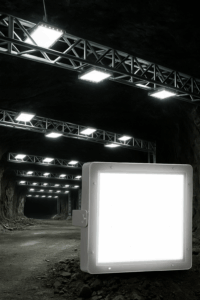
Marine and offshore operations — whether on oil platforms, ports, shipyards, or vessels — depend on effective lighting for both safety and productivity. Crews work around the clock, often in hazardous conditions where visibility directly influences accident prevention and operational efficiency.
The challenges are formidable:
In this context, conventional fixtures fail quickly. Steel housings rust, polycarbonate lenses crack, and gasket seals degrade. Frequent replacement is costly — not just in terms of parts, but also in labor and downtime. Offshore platforms, for example, may require helicopter transport of technicians, multiplying the expense of simple lighting maintenance.
The need is clear: a robust, efficient, and low-maintenance lighting solution designed specifically for corrosive marine environments.
Lighting systems in marine and offshore facilities must meet stringent requirements that go beyond standard industrial fixtures.
2.1 Durability
Fixtures must withstand prolonged exposure to seawater, salt spray, and corrosive chemicals. This necessitates advanced coatings, marine-grade materials, and superior sealing. Mechanical impact resistance (IK ratings) is equally important for locations exposed to equipment movement and heavy machinery.
2.2 Optical Performance
Beyond surviving the environment, lighting must meet operational needs:
2.3 Thermal Management
Marine facilities may experience hot sun, engine exhaust, or enclosed conditions with minimal airflow. Efficient thermal design ensures LEDs maintain lumen output and long lifespan.
2.4 Hazardous Area Compliance
Certain offshore zones, particularly oil and gas platforms, are classified as hazardous due to flammable gases. Fixtures must meet ATEX/IECEx standards for explosion-proof performance when required.
2.5 Serviceability and Flexibility
Mounting on decks, masts, cranes, and walkways requires adaptable brackets and wiring systems. Fixtures should allow quick servicing, modular driver replacement, and minimal downtime.
2.6 Regulatory and Environmental Compliance
LEDs must align with international marine classifications (Lloyd’s, DNV, ABS), as well as safety standards (UL, CE). Mercury-free construction supports environmental stewardship and compliance with RoHS directives.
The longevity of anti-corrosion LED luminaires is rooted in engineering choices that target each failure mode common in marine environments.
3.1 Housing Materials
3.2 Surface Treatments and Coatings
Powder coatings, anodizing, and PTFE fluoropolymer coatings create durable barriers against corrosion. Testing standards such as ASTM B117 (salt spray testing) validate coating performance under accelerated conditions.
3.3 Sealing and Gasketing
IP66, IP67, and IP69K ratings ensure resistance to water ingress. Silicone and EPDM gaskets outperform neoprene in resisting salt and chemical degradation. Potting techniques further protect electronic drivers.
3.4 Fasteners and Hardware
Marine-grade stainless fasteners prevent galvanic corrosion. Captive hardware designs reduce risk of dropped parts during offshore servicing.
3.5 Optics and Lenses
UV-stable polycarbonate or tempered glass prevents yellowing and maintains optical clarity. Anti-fog and hydrophobic coatings minimize light distortion from condensation.
3.6 Thermal Design
Extruded aluminum heat sinks and optimized airflow channels dissipate heat. Thermal interface materials prevent hotspots, ensuring lumen maintenance (L70) over 50,000–100,000 hours.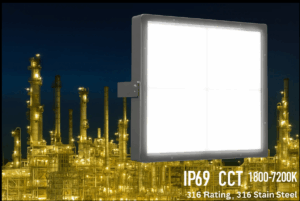
Procurement teams should prioritize fixtures meeting the following:
A quick-reference checklist helps engineers align fixture selection with operational needs.
Even the best fixtures require careful installation to maximize performance.
LED adoption in marine environments is driven as much by economics as by durability.
6.1 Energy Savings
Compared to 400W metal halide lamps, a 200W LED can deliver equivalent or better illumination, reducing energy consumption by 50%. For a platform with 500 fixtures, this equates to tens of thousands of kWh saved annually — critical when relying on onboard generators.
6.2 Maintenance Reduction
Traditional fixtures may require lamp changes every 6–12 months. With anti-corrosion LEDs rated for 50,000–100,000 hours, replacements drop to once every 10+ years. On offshore platforms, where maintenance costs can exceed $1,000 per fixture serviced, savings are substantial.
6.3 Total Cost of Ownership
Although LEDs have higher upfront costs, lifecycle analysis consistently shows payback periods of 2–4 years, after which savings accumulate.
Marine and offshore fixtures must meet a range of certifications:
Compliance ensures both worker safety and regulatory acceptance for offshore installations.
Offshore Oil Platform
A North Sea platform replaced 400 HID fixtures with 250W anti-corrosion LEDs rated at 200 lm/W. Results included a 60% energy reduction, 75% fewer maintenance interventions, and payback within 30 months.
Port Cargo Yard
Port operators installed 600 high-mast anti-corrosion LED floodlights. Enhanced uniformity improved crane operator visibility and reduced night-time accidents by 40%.
Research Vessel Retrofit
A marine research vessel upgraded to LED deck lighting. Modular, sealed units survived continuous salt spray without failures during a two-year expedition, improving crew morale and reducing generator fuel consumption.
Procurement teams should evaluate suppliers on:
The next wave of marine-grade lighting includes:
Marine and offshore facilities demand lighting solutions that balance durability, safety, efficiency, and compliance. Anti-corrosion LEDs meet this challenge head-on, delivering reliable illumination under extreme conditions, cutting operational costs, and extending service intervals.
For operators, the path forward is clear: audit existing lighting, define performance specifications aligned with marine standards, trial anti-corrosion LED solutions, and scale deployment. The investment delivers not only financial return but also greater safety and sustainability in one of the world’s toughest environments.
–The end–