I. Introduction
Chemical plants are among the most demanding industrial environments in the world. They operate continuously, handle volatile compounds, and are exposed to corrosive gases, aggressive cleaning agents, and high-humidity conditions. Within these challenging surroundings, lighting is far more than a convenience—it is a vital element of safety, efficiency, and compliance. Without reliable illumination, operators face increased risks of accidents, process errors, and costly downtime.
However, conventional lighting systems—such as fluorescent or high-intensity discharge (HID) lamps—often fail prematurely in chemical processing facilities due to rapid degradation when exposed to corrosive atmospheres. Rust, vapor attack, and electrical failure are common, leading to frequent maintenance and replacements. These problems not only inflate operational costs but also compromise safety and productivity.
Corrosion-proof LED lighting has emerged as a transformative solution. By combining high-efficiency solid-state illumination with robust anti-corrosion engineering, modern LED luminaires are purpose-built to withstand chemical exposure, moisture ingress, and harsh industrial cleaning procedures. Their performance, reliability, and longevity make them indispensable in chemical processing plants where downtime is not an option.
This article explores the specific challenges chemical plants face with lighting, highlights the engineering advantages of corrosion-proof LED luminaires, details their applications, and demonstrates their real-world benefits through case studies. Finally, it looks at future trends shaping the next generation of lighting for corrosive industrial environments.
II. Lighting Challenges in Chemical Plants
- Environmental Factors
Chemical processing facilities are harsh environments for lighting systems. The following factors accelerate fixture deterioration:
- Corrosive gases and vapors: Chlorine, hydrogen sulfide, sulfur dioxide, ammonia, and other chemicals present in processing areas are highly reactive. They corrode metals, degrade plastics, and cause premature fixture failure.
- Acids and solvents: Acid mists, alkali solutions, and industrial cleaning agents chemically attack luminaire housings and lenses, causing pitting, discoloration, or cracks.
- High humidity and condensation: Moisture accelerates corrosion and creates condensation inside fixtures, leading to electrical shorts and reduced service life.
- Chemical splash and washdowns: Many plants use pressurized cleaning systems that expose fixtures to hot water, steam, and detergents. Without high ingress protection, luminaires quickly fail under these conditions.
- Operational Demands
Lighting in chemical plants is subject to operational pressures beyond environmental exposure:
- Continuous operation: Most chemical plants run 24/7, which requires lighting systems that deliver consistent output without overheating or rapid lumen depreciation.
- Safety-critical illumination: Workers rely on precise visibility to handle hazardous materials, operate machinery, and detect leaks or spills. Poor lighting compromises both worker safety and process integrity.
- Hazardous classifications: Many zones within chemical plants fall under hazardous classifications (such as ATEX, IECEx, or NEC Class I Div 2), requiring explosion-proof or intrinsically safe lighting systems.
- Consequences of Inadequate Lighting
The risks of inadequate or failed lighting in chemical plants are severe:
- Frequent failures: Conventional fixtures corrode quickly, leading to dark zones and unsafe working conditions.
- Escalating costs: Replacing fixtures more often than expected raises total cost of ownership. Maintenance labor costs also increase due to frequent access requirements.
- Safety incidents: Poor illumination contributes to accidents, process errors, and failure to detect hazards.
- Regulatory non-compliance: Chemical plants are subject to strict occupational safety and environmental standards. Insufficient lighting can result in violations, fines, or shutdowns.
The combination of environmental stressors and operational demands makes corrosion-proof lighting not just beneficial—but essential.
III. Advantages of Corrosion-Proof LED Lighting
Corrosion-proof LED luminaires address these challenges with advanced engineering, robust materials, and efficient light output. Their advantages span durability, safety, cost savings, and sustainability.
- Material & Structural Durability
- Anti-corrosion housings: Fixtures are built from marine-grade aluminum, stainless steel, or reinforced polymer composites. These materials resist oxidation, chemical attack, and mechanical wear.
- Protective coatings: Advanced powder coatings and nano-coatings provide additional resistance against acids, alkalis, and solvents.
- Ingress protection: IP66, IP67, or IP69K ratings ensure fixtures remain sealed against dust, high-pressure sprays, and chemical ingress. This makes them suitable for washdowns and high-humidity zones.
- High Efficiency & Performance
- Exceptional efficacy: State-of-the-art LEDs deliver up to 200 lumens per watt, significantly reducing energy consumption compared to legacy systems.
- Long lifespan: Many corrosion-proof LEDs exceed 100,000 hours (L70), allowing them to operate for over a decade without replacement in continuous-use environments.
- Stable light output: LEDs provide consistent brightness, uniformity, and color temperature without flicker, reducing eye strain and enhancing worker performance.
- Flexible spectrum: Adjustable correlated color temperature (CCT 1800K–7200K) enables optimization for specific applications, such as warm light for comfort zones or cool white for inspection areas.
- Safety & Compliance
- Explosion-proof variants: ATEX, IECEx, and UL-certified luminaires provide safe operation in hazardous environments with flammable gases and dusts.
- Low heat emission: Unlike HID lamps, LEDs generate minimal heat, reducing fire risks in volatile environments.
- Flicker-free performance: Stable illumination reduces visual fatigue and helps workers detect leaks, cracks, or spills more easily.
- Cost Savings & Sustainability
- Reduced maintenance: Long service life and corrosion resistance minimize fixture replacement and maintenance cycles.
- Lower operating costs: Energy efficiency contributes to lower utility bills, often reducing lighting energy consumption by 50–70%.
- Sustainability benefits: LEDs align with corporate ESG initiatives by reducing energy usage, minimizing waste, and eliminating mercury found in traditional lamps.
IV. Key Design Features of Corrosion-Proof LED Luminaires
To withstand chemical plant conditions, specialized engineering features are integrated into corrosion-proof LED luminaires.
- Protective Materials & Coatings
- Marine-grade aluminum housings resist salt and acid mists.
- 316L stainless steel provides unmatched corrosion resistance in chlorine-rich or acidic environments.
- Polymer composites resist chemical degradation while maintaining lightweight durability.
- Electrostatic powder coatings protect against chemical attack and mechanical wear.
- Optical & Electrical Design
- High-transparency tempered glass or polycarbonate lenses resist yellowing and cracking.
- Specialized optics deliver precise light distribution to minimize glare and shadowing.
- Surge protection devices (SPDs) safeguard electronics against power fluctuations.
- Thermal management systems ensure consistent LED performance under high ambient temperatures.
- Ingress Protection & Sealing
- IP69K sealing protects against high-pressure, high-temperature water jets used in industrial washdowns.
- Silicone gaskets and O-rings provide long-lasting sealing against moisture and chemicals.
- Breathing valves prevent condensation build-up inside housings.
- Customization Options
- Wide wattage ranges: From compact 30W luminaires for confined spaces to powerful 250W fixtures for expansive halls.
- Modular designs: Enable scalable lighting layouts and simplified maintenance.
- Tunable white and specialty spectrum LEDs for different plant zones (e.g., cool white for inspection areas, warm white for breakrooms).
V. Applications in Chemical Plant Operations
Corrosion-proof LED lighting is versatile, serving multiple areas of chemical plants with tailored solutions.
- Process Areas
- Reactors, distillation towers, and mixers demand high lux levels (often >500 lux) for precise monitoring.
- Fixtures must withstand exposure to vapors, heat, and cleaning agents.
- Storage & Handling Zones
- Tank farms, drum storage, and loading bays require durable outdoor luminaires that resist weathering and chemical vapors.
- Floodlights and area lights provide wide coverage with robust housings.
- Maintenance & Inspection Areas
- Workshops and inspection zones need glare-free, uniform lighting for safe handling of equipment and accurate visual assessments.
- Outdoor Plant Infrastructure
- Walkways, perimeters, and pipelines benefit from corrosion-resistant floodlights and pole-mounted luminaires.
- Security lighting ensures safe navigation and protects facilities during night shifts.
VI. Case Studies & Practical Examples
- Electroplating Facility
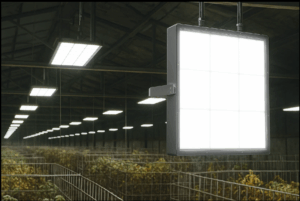
A large electroplating plant operating in a high-humidity, acidic atmosphere required durable lighting. Engineers installed 360 × 250W IP69 LED luminaires, delivering an average 600 lux across the production hall. Despite aggressive vapors, the fixtures maintained stable performance with minimal maintenance.
- Waste Treatment Plant
In a waste treatment facility prone to corrosive gas emissions, 285 × 250W anti-corrosion LEDs were deployed. They provided 500 lux illumination across processing zones. Compared to previous fluorescent fixtures, energy savings exceeded 60%, while downtime dropped dramatically.
- Chlorine Processing Plant
A chlorine processing unit adopted explosion-proof, corrosion-resistant LED luminaires in hazardous areas. The lighting system ensured compliance with IECEx standards while delivering long-term reliability. This eliminated frequent lamp replacement cycles and reduced operational risk.
VII. Implementation Considerations
- Lighting Layout & Lux Calculations
- Proper design ensures uniform light distribution across complex plant structures.
- Software-based lux simulations confirm compliance with safety standards.
- Maintenance Planning
- While LEDs require less frequent maintenance, periodic cleaning and inspection ensure optimal performance.
- Anti-stick coatings and sealed housings reduce dirt and chemical accumulation.
- Integration with Smart Systems
- Dimming controls and motion sensors reduce energy consumption during low-activity periods.
- IoT-enabled monitoring tracks fixture performance, predicting failures before they occur.
- Smart controls enhance both energy efficiency and safety assurance.
VIII. Future Trends in Chemical Plant Lighting
The next generation of corrosion-proof LED lighting will continue evolving with new technologies:
- Advanced nano-materials for coatings that resist even the most aggressive chemicals.
- Smart, connected lighting systems for predictive maintenance and adaptive illumination.
- Integration with renewable energy sources such as solar-powered LED arrays for sustainability.
- Human-centric lighting designs to enhance worker well-being in continuous operations.
- Specialized optics to reduce glare, improve visual comfort, and further increase safety.
IX. Conclusion
Lighting in chemical plants is not a mere utility—it is a lifeline for safety, compliance, and efficiency. The hostile conditions of chemical processing environments demand luminaires that can resist corrosive gases, high humidity, and aggressive cleaning procedures.
Corrosion-proof LED lighting provides the durability, efficiency, and safety performance required by modern chemical facilities. With advanced materials, superior energy efficiency, and long service life, these fixtures reduce costs while ensuring uninterrupted operations. Case studies across electroplating, waste treatment, and chlorine processing facilities demonstrate the tangible benefits of deploying corrosion-proof LEDs in demanding industrial contexts.
As chemical plants evolve, corrosion-proof LED lighting will continue to play a central role in protecting workers, improving efficiency, and achieving sustainability goals. In essence, these luminaires are more than just lighting—they are a critical investment in industrial resilience and long-term operational excellence.
–The End–