
In industrial and commercial settings where temperatures soar to 200°C and beyond, conventional lighting systems fail to deliver the performance and reliability needed for consistent operations. Whether it’s in steel mills, foundries, glass manufacturing, or high-temperature processing zones, extreme heat poses a formidable challenge for most electronics—especially lighting systems. Yet, with advances in thermal management, material science, and LED engineering, a new generation of high-temperature-resistant LED lights is emerging, built to thrive where others fail.
This article explores how these specialized LED luminaires are engineered to survive and function in environments reaching 200°C, focusing on their core design elements, performance advantages, and the industries that depend on them.
Lighting in high-heat conditions is no trivial task. Traditional lighting—be it incandescent, halogen, or even some basic LED fixtures—begins to degrade rapidly in sustained temperatures above 60–80°C. The key challenges include:
To combat these issues, lighting products intended for 200°C environments must be engineered with thermal endurance as a primary requirement, not an afterthought.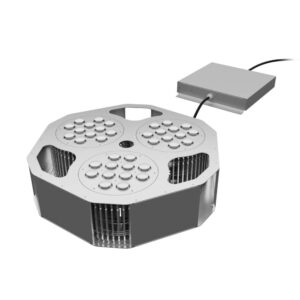
Designing an LED light that can operate in 200°C conditions requires a complete rethinking of materials, components, and thermal dynamics. Key areas of innovation include:
High-temperature LEDs use specialized materials that retain mechanical integrity under extreme heat:
In environments where active cooling (e.g., fans) is impractical, passive thermal management becomes essential:
The LED chips themselves are selected or specially fabricated for high-heat operation:
In many high-temperature LEDs, the LED driver is either remotely located outside the hot zone or encased in a thermally shielded compartment:
While enduring 200°C is impressive, these LEDs also offer excellent performance across other important metrics:
Despite the heat, top-grade models can still deliver 100–130 lm/W, sufficient for illuminating large industrial areas without energy waste.
Thanks to robust thermal management and quality LED chips, brightness doesn’t degrade easily, even during prolonged operation at peak temperatures.
Standard LED lifespans of 50,000–100,000 hours still apply, with minimal lumen depreciation, resulting in lower maintenance costs in hard-to-access areas.
Most high-temperature LEDs are IP66 or higher, providing protection against:
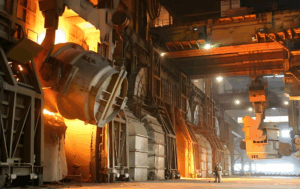
The heart of metal processing demands lighting that can withstand temperatures of 150°C–200°C near furnaces and rolling lines. High-temp LEDs offer:
Furnaces and kilns used in glassblowing or tile production often emit radiant heat that requires LED fixtures to endure:
Lighting systems near turbines, engines, or boiler rooms must operate continuously without overheating, where:
Combining high temperatures with flammable atmospheres, these environments require ATEX-certified, explosion-proof, and heat-tolerant lighting:
In continuous baking or heat treatment tunnels, lighting must function despite constant heat exposure. Specialized LED strips or spotlights are often mounted:
To ensure safety and performance in extreme heat, high-temperature LEDs should comply with industry regulations:
Custom certifications may also be needed for nuclear plants, aerospace, or cleanroom environments where temperature and contamination control is critical.
LEDs built for 200°C offer numerous advantages over legacy lighting systems (like HPS, halogen, or CFLs):
| Feature | High-Temp LED | Halogen | HPS |
| Operating Temperature | Up to 200°C | ~80°C | ~100°C |
| Energy Efficiency | ★★★★☆ | ★★☆☆☆ | ★★★☆☆ |
| Maintenance Interval | Long (50,000+ hrs) | Short | Medium |
| Startup Time | Instant | Fast | Slow (warm-up) |
| Environmental Impact | Low | Medium | High (contains mercury) |
| Vibration Resistance | High | Low | Medium |
When choosing a fixture for 200°C conditions, consider:
LED innovation is continuous, even in extreme-use categories. We can expect:
As demand increases in sectors like green hydrogen, carbon capture, and advanced metallurgy, high-temperature LED lighting will continue to evolve into smarter, smaller, and more rugged solutions.
In environments where most lighting fails to operate—or survive—LED fixtures designed for 200°C offer a dependable, energy-efficient, and long-lasting solution. These lights are engineered with precision materials, passive cooling strategies, and thermally resilient components that allow them to perform reliably in the world’s hottest industrial settings. From steel foundries to tunnel kilns, they ensure that heat is no longer an obstacle to illumination.
Built for the heat, and built to last, these specialized LED lights are not just surviving extreme conditions—they’re illuminating the path forward for industrial innovation.
–The End–