Lighting Up Friday Night Lights: LEDs in High School Football Stadiums
1. Introduction: A Tradition Under the Lights
In towns and cities across the United States, Friday night high school football games are more than just athletic contests. They are cultural events that bring communities together, ignite school spirit, and inspire local pride. The thrill of competition under bright lights creates unforgettable memories for players, coaches, families, and fans.
For decades, these events have depended on artificial lighting to ensure games can be played safely and seen clearly after sunset. However, the technology behind those lights has rapidly evolved. Traditional halogen and metal halide fixtures are now giving way to modern, energy-efficient LED systems. This shift is not just a technological upgrade—it’s a transformation that is enhancing every aspect of the high school football experience.
2. Why LEDs? The Technological Shift
The transition to LED (Light Emitting Diode) lighting in high school stadiums represents a significant leap forward. While older lighting systems provided basic functionality, LEDs bring a host of benefits that were previously unattainable.
LEDs offer:
Instant On/Off: Unlike metal halide lights, which require a warm-up period, LEDs power on instantly, allowing greater control and flexibility.
Superior Energy Efficiency: LEDs can produce more lumens per watt, meaning they use significantly less energy to produce the same (or better) brightness.
Longer Lifespan: With operational lives of 50,000 hours or more, LED fixtures drastically reduce the frequency and cost of replacement.
Better Beam Control: LED lights offer precise directional lighting, reducing spill light and improving focus on the playing field.
In short, LEDs outperform traditional lighting in nearly every category, making them an ideal choice for high school football venues.
3. Enhancing Player Performance and Safety
Good lighting isn’t just about visibility; it’s about performance and safety. Poorly lit fields can obscure players’ vision, affect depth perception, and increase the risk of injury. With LED lighting, schools can provide uniform, high-quality illumination that enhances athletic performance.
Uniform Brightness: LEDs minimize shadows and ensure consistent lighting across the entire field, reducing the chance of collisions or missed plays.
High CRI (Color Rendering Index): LED lights make colors appear more vivid and true-to-life, which helps players react faster and more accurately.
Flicker-Free Light: Flickering can distract players and even cause issues for people with light sensitivities. LED systems are flicker-free, providing a stable visual environment.
By delivering safer and more optimal playing conditions, LEDs help athletes perform at their best while reducing the risk of accidents.
4. Creating an Unforgettable Fan Experience
For fans, the game-day experience is just as important as the game itself. LED lighting systems dramatically improve the viewing experience for everyone in the stands.
Brighter, Clearer Views: Enhanced visibility allows spectators to follow the action more easily, regardless of where they are seated.
Atmospheric Effects: LEDs can be programmed for special effects during halftime shows, team entrances, or touchdowns—syncing lights with music to create a stadium-like atmosphere.
School Spirit: Custom color lighting can reflect school colors, adding a sense of pride and unity to every event.
LEDs do more than light the field—they energize the entire venue, turning routine games into immersive community experiences.
5. Supporting Broadcast and Livestreaming Needs
As more schools embrace livestreaming and digital broadcasting, the need for high-quality lighting has never been greater. Whether it’s for the local cable channel, YouTube, or a school’s own website, LED lighting enables professional-grade video capture.
High CRI and Consistency: LEDs reveal accurate colors and sharp contrasts, essential for HD and 4K video recording.
No Flicker or Banding: Flickering lights can ruin a broadcast and distract viewers. LEDs eliminate these issues.
Better for Instant Replay and Highlights: Clear, high-definition footage allows for better analysis, replay, and social media sharing.
In this digital age, quality lighting helps schools extend the reach and impact of their athletic programs.
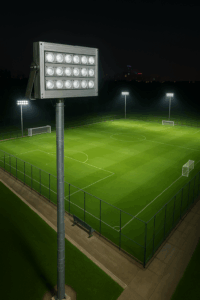
stadium light led
6. Energy Efficiency and Cost Savings for School Districts
One of the most compelling reasons for schools to switch to LED lighting is the financial benefit. Though the initial investment may seem substantial, the long-term savings are undeniable.
Reduced Energy Bills: LEDs use up to 70% less energy than traditional lighting, cutting utility costs dramatically.
Minimal Maintenance: With fewer bulb replacements and lower maintenance requirements, operational costs drop significantly.
Rebates and Incentives: Many state and local programs offer rebates or grants to schools that upgrade to energy-efficient lighting.
Over time, LED systems often pay for themselves, freeing up school budgets for other educational or athletic needs.
7. Environmental and Community Impact
LED lighting is also a win for the environment and the broader community. The precision of LED beam angles means less light pollution and reduced impact on nearby homes and wildlife.
Lower Carbon Footprint: Reduced energy consumption translates to fewer greenhouse gas emissions.
Dark Sky Compliance: LED lighting systems can be designed to comply with “dark sky” standards, preserving night skies in rural or suburban areas.
Community Relations: Better lighting control and reduced glare contribute to better neighbor relations, especially in densely populated areas.
By choosing LEDs, schools demonstrate environmental responsibility and community awareness.
8. Customization and Smart Controls
Modern LED systems offer unprecedented control and customization, allowing schools to tailor lighting to their specific needs.
Remote Management: Lighting can be controlled via smartphone apps or centralized control panels.
Dimming and Scheduling: Lights can be dimmed or scheduled to run only when needed, saving energy and extending lifespan.
Zoning Capabilities: Different zones (e.g., field, stands, parking lots) can be controlled independently.
These features allow schools to optimize lighting for games, practices, community events, or emergency use.
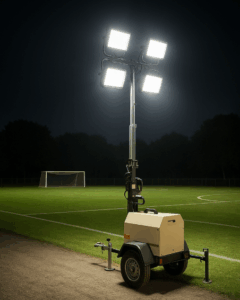
Light tower
9. Case Studies: High Schools That Made the Switch
Across the country, many high schools have already reaped the benefits of LED lighting.
Example 1: Cedar Hill High School, Texas
Replaced outdated metal halide lights with high-efficiency LEDs.
Reported a 65% reduction in electricity bills.
Enhanced game-day ambiance with programmable color effects.
Example 2: Lincoln High School, California
Upgraded to LED lights in 2023.
Improved livestream quality led to a surge in online viewership and community engagement.
Example 3: Oak Ridge High School, Tennessee
Took advantage of a state energy grant to fund LED conversion.
Reduced maintenance calls by over 80% in the first year.
These success stories show how LEDs are transforming high school stadiums both financially and experientially.
10. Installation and Retrofit Options
Whether a school is building a new stadium or upgrading an old one, LED lighting offers flexible installation options.
New Construction: For new facilities, LED lights can be integrated from the ground up with optimal pole placement and wiring.
Retrofits: Older stadiums can be upgraded by replacing fixtures and control systems without needing to replace entire infrastructure.
Consultation and Design: Working with experienced lighting professionals ensures compliance with safety standards, optimal performance, and minimal disruption.
LED retrofitting can often be completed during offseason months, ensuring the field is ready for the next season.
11. Looking Ahead: The Future of High School Stadium Lighting
The future of stadium lighting is not just bright; it’s smart. Emerging trends and innovations are making LED systems even more powerful and efficient.
Solar Integration: Combining LED lighting with solar power and battery backups can reduce grid reliance.
AI-Driven Controls: Predictive software can automate lighting based on schedules, weather, or event type.
Interactive Lighting Experiences: Future systems may integrate augmented reality or interactive fan lighting features.
As technology advances, LED lighting will continue to evolve, offering even more benefits to schools and communities.
12. Conclusion: Lighting the Path Forward
From safer playing fields and clearer broadcasts to reduced costs and environmental benefits, LED lighting has revolutionized the high school football experience. It honors the cherished tradition of Friday night lights while propelling it into a sustainable, dynamic future.
School administrators, athletic directors, and community leaders looking to enhance their facilities should strongly consider the long-term advantages of switching to LED. With expert guidance and the right investment, high school stadiums can shine brighter—literally and figuratively—for generations to come.